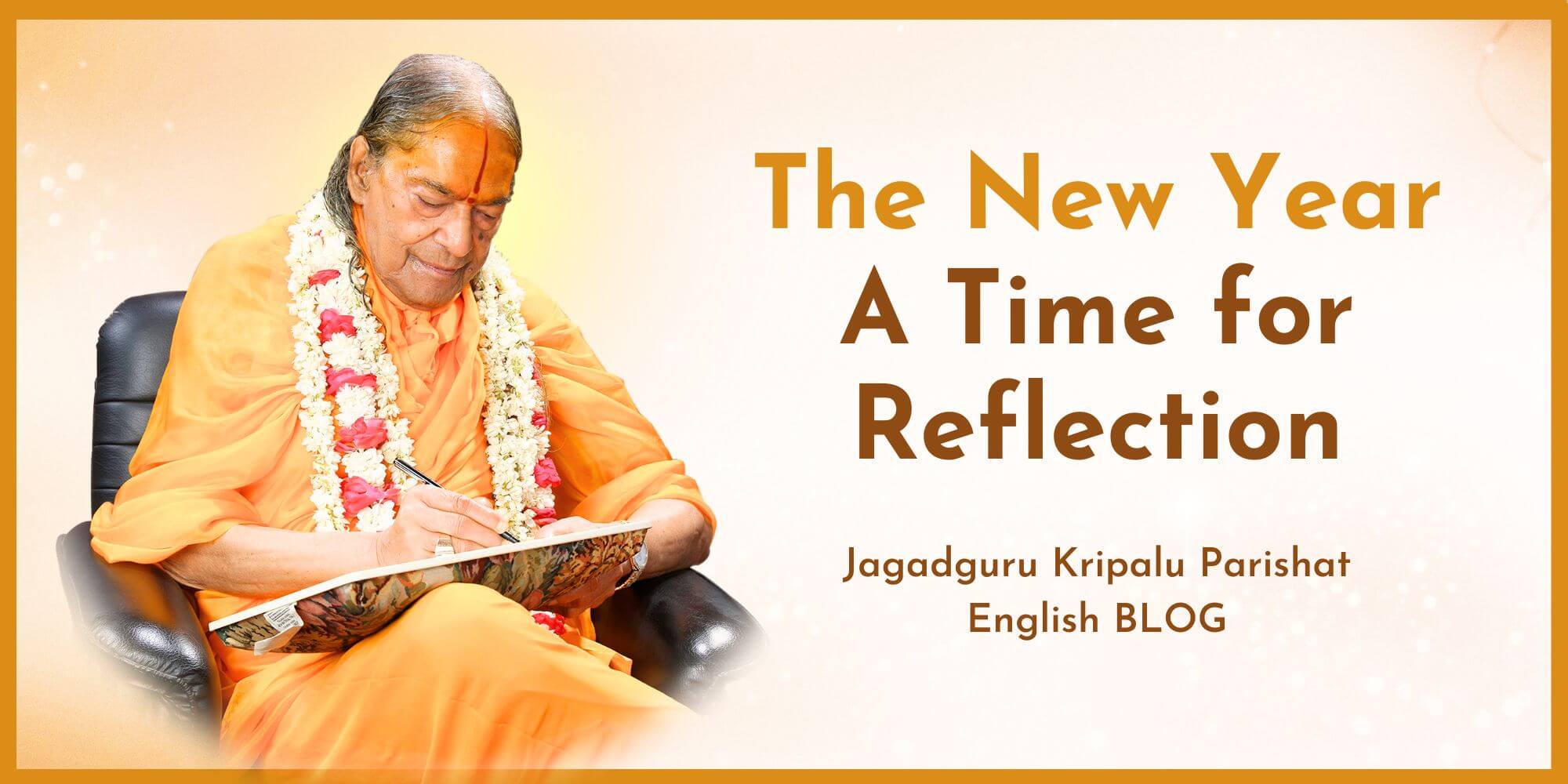
The New Year: A Time for Reflection
Message from Jagadguru Shri Kripalu Ji Maharaj
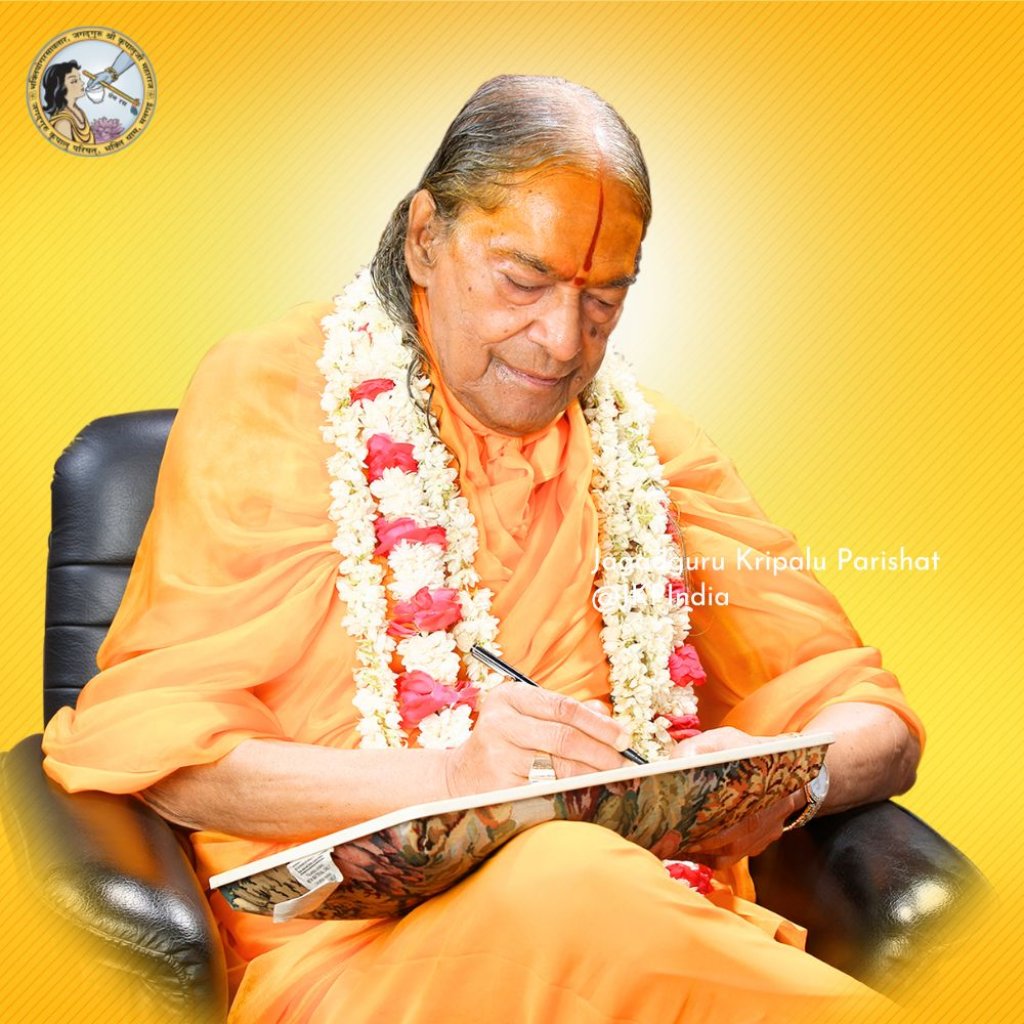
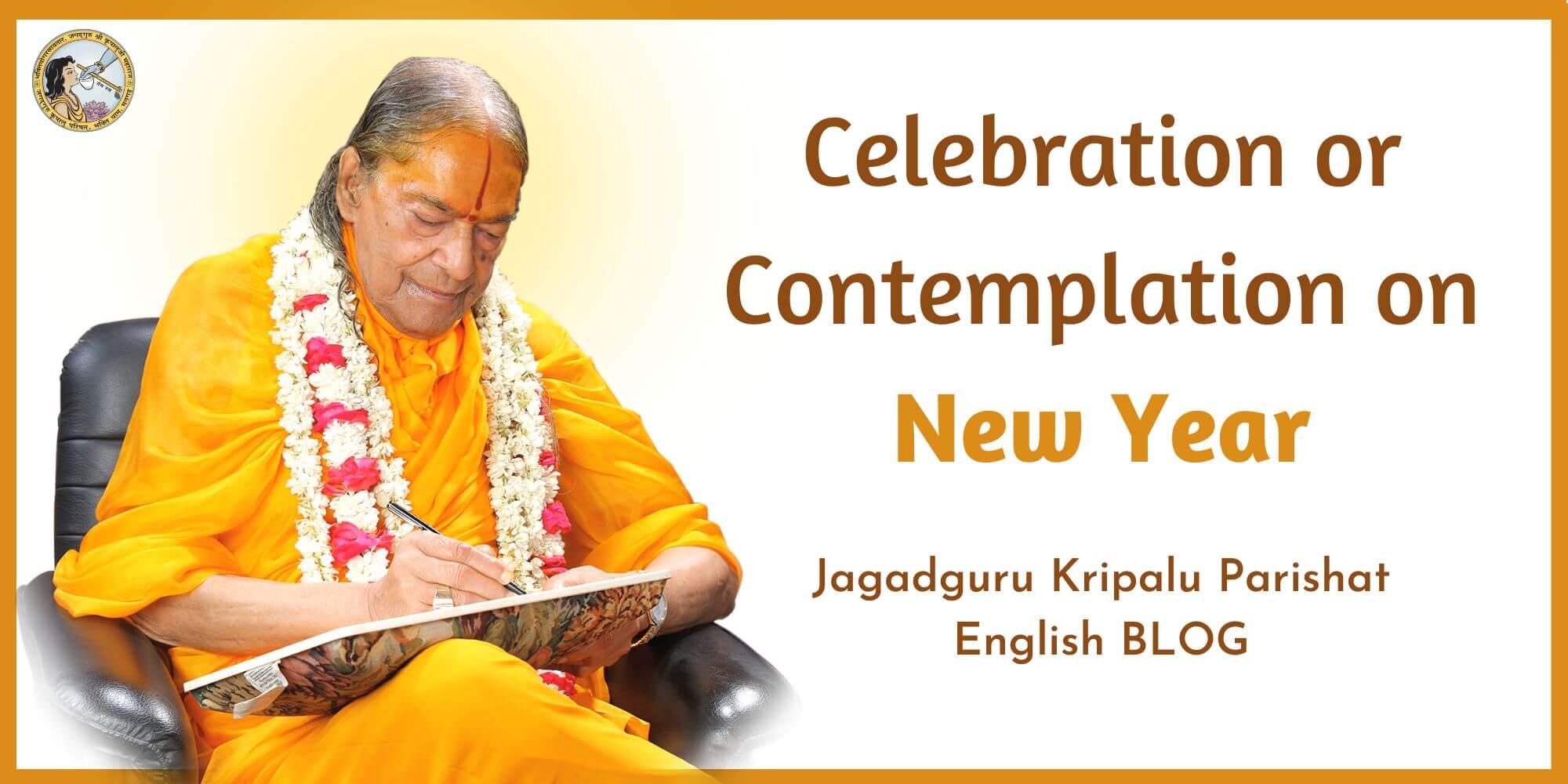
As we stand once again at the threshold of a New Year, these timeless words of Jagadguru Shri Kripalu Ji Maharaj invite us to pause and reflect.
Today is the last day of the year. Tomorrow there will be celebrations all over the world. But this is not really a matter of celebration. The advent of the New Year is not a cause for joy; it is a cause for worry. Another precious year of human life has passed, and we must pause to ask ourselves how wisely it has been used.
Suppose you have $100,000 in your bank account and you spend $50,000. Do you celebrate? No. You think, “Oh! I only have $50,000 left.” When it reduces to $20,000, you worry even more. When it comes down to $10,000, the concern increases further.
In exactly the same way, God has given us the human form for a specific purpose – to reach our ultimate destination. A year of our precious human life has passed. We must ask ourselves: how much headway did we make? How close did we come to God? How much upasana did we actually practise?
The word upasana means to go nearer. Upa means near, aas means to sit, and the suffix yucha completes the meaning. Thus, upasana means to go closer to God. The question then arises – how close did we go this year?
Suppose a person is feeling cold and a fire is burning nearby. The closer he moves towards the fire, the more his cold is dispelled. Similarly, the closer we go towards God, the more our worldly attachments are reduced. So how near did we come to Him? How far is God from us now? And how far did we move away from the world? These are the questions we should reflect upon – yet, instead of reflecting, we celebrate.
We proudly say, “Twenty years of my life are over. Fifty years have passed. Eighty years have passed.” We even tell our children and grandchildren, “Son, I am not worried about myself; my life is over. You should worry about yourself.” But how can we say that our life is over? Is this human body a burden that we are eager to get rid of?
If a man is imprisoned for ten years and nine years have passed, he celebrates. He thinks, “Only a little time is left; I will soon be free.” In that case, celebrating the passing of time is justified. But why are we celebrating? Do we think that simply by dying we will attain liberation? Will we gain freedom from the bondage of 8.4 million life forms merely by leaving the body?
We have not done anything to deserve that. We have not even thought about doing anything. The scriptures clearly state that whatever thoughts occupy the mind at the final moment of death, the soul attains a corresponding destination. If even for one moment before dying a person had felt genuine remorse, if the mind had turned to God even for a second, then God would have been attained.
But instead, we live carelessly and even die carelessly. We think, “I am not going to die anytime soon.” Someone says, “I am only ninety years old.” What does that mean? That one will live till a hundred? Suppose one lives for two hundred years – what will happen after that?
Therefore, we must analyse ourselves. In politics, after elections, every party conducts self-analysis – why did we lose, where were we lacking, what needs correction. In the same way, we should analyse our own lives at least once a year, once a month, and if possible, for two or three minutes every night before sleeping.
We should think: what did I do today? What good did I do? What mistakes did I make? How much did my mind go towards the world, and how much towards God? If we reflect daily, we will make fewer mistakes the next day. If we reflect monthly, our mistakes will reduce even further. But we do not think like this – not even at the time of death.
There was once a District Magistrate who narrated an incident to me. He had entered a writing competition. While thinking deeply, he fell asleep and slept for one full hour. When he woke up, only half an hour remained. He wrote hurriedly and failed. At least he had half an hour left.
Yet we do not reflect even till our final moment. There was an engineer from Agra, a devotee, who constructed the satsang hall in Mangarh. One night he went to sleep and never woke up. He suffered a heart attack in his sleep. Such is Kaal. When one’s time comes, not even a moment extra is given.
This rule applies to everyone – the king, the pauper, and the saint. Even a God-realised saint must leave the body; what to speak of one who is under the control of Maya. One may leave smiling; another may leave crying. Even Bhagwan comes and goes.
When Bhagwan Ram completed His 11,000 years on earth, Yamraj approached Him and said that the love of devotees may have made Him forget, but His predetermined time on earth had come to an end. If He wished to stay longer, Yamraj would not interfere.
Tomorrow marks the beginning of a New Year. Celebrate it only if, in the coming year, you resolve to forcefully take your mind to God. The mind will not automatically go towards God; you must take it there deliberately.
If the mind behaves stubbornly, you must become more stubborn with your intellect. For countless lifetimes, we have practised taking the mind towards the world. Why do we expect it to suddenly turn towards God?
Ved Vyas has explained this beautifully: if one repeatedly reflects that happiness lies in the world, attachment to the world will increase. If one repeatedly reflects that happiness lies in God alone, attachment to God will increase. It is only a matter of chintan – repeated reflection.
Wherever you practise taking the mind, that is where it will go. Therefore, we must increase the chintan of God. That is all there is to it.
May we carry this guidance into the New Year – not merely as words to read, but as truths to live by, with sincere reflection and renewed resolve.
From a discourse by Jagadguru Shri Kripalu Ji Maharaj
(Compiled from Maharaji’s teachings for reflection at the dawn of the New Year.)
A brief introduction of Jagadguru Shri Kripalu Ji Maharaj*
(Known by His devotees as Shri Maharaj Ji)
The original title of Jagadguruttam (Greatest Spiritual Teacher of the World) was bestowed upon Shri Kripalu Ji Maharaj on January 14, 1957, by Kashi Vidvat Parishad (a council of 500 greatest scholars saints of India). He composed divine texts like Prem Ras Madira, Prem Ras Siddhant, and Radha Govind Geet to lead us on the right path of devotion. He also gave priceless monuments as gifts to the world which include Bhakti Mandir located in Bhakti Dham, Mangarh, Prem Mandir located in Vrindavan Dham, and Kirti Mandir located in Barsana Dham. Shri Maharaj Ji also built hospitals for the impoverished, the Jagadguru Kripalu Chikitsalaya in Vrindavan, Jagadguru Kripalu Chikitsalaya in Barsana, and another one in Pratapgarh. All three help millions of underprivileged to gain free access to medical care. His Kindergarten, School, and College for impoverished girls Jagadguru Kripalu Parishat Education is located in Kunda and provides completely free education. To stay updated with all the news and events of Jagadguru Kripalu Parishat, visit www.jkp.org.in/jkpwhatsapp.
Follow us on Social
Recent Posts
Ram in Krishna, Krishna in Ram
28 March 2026
The True Spiritual Significance of Holi
5 March 2026
Gaurang Mahaprabhu: The Incarnation of Divine Love
5 March 2026
Mahashivratri -Understanding the Oneness of the Divine
14 February 2026

Beyond Valentine’s Day: The Divine Love of Gopi Prem
14 February 2026
Jagadguruttam’s Teachings: How to Practice Bhakti for Shri...
17 January 2026
Jagadguruttam’s Teachings: Where is True Happiness?
17 January 2026
Jagadguruttam’s Teachings: WHO AM I?
17 January 2026
The New Year: A Time for Reflection
2 January 2026

Tulsi and Shaligram Vivah
2 November 2025
Akshay Navami: Remembering Radha Rani’s Lotus Feet
31 October 2025
Gopashtami: When God Became a Cowherd
29 October 2025
The Story Behind the Worship of Giriraj Govardhan
22 October 2025
Sharad Purnima Special – Always Feel the Presence of G...
5 October 2025
10th Anniversary of Jagadguru Kripalu Chikitsalaya, Vrindava...
26 September 2025
Janmashatami Special – Why connect with Shri Krishna?
11 August 2025
Janmashatami Special – Who is Shri Krishna?
5 August 2025
Who is More Merciful – God or the Saint?
11 July 2025
Who is Lord Jagannath?
27 June 2025
True Yoga: A Union of Body, Mind and Soul
22 June 2025
Celebrating Father’s Day with God
13 June 2025
Shri Radha Rani – Our Eternal Mother
10 May 2025
Sita is Ram, Ram is Sita
5 May 2025
Hanuman Ji’s Unmatched Seva
12 April 2025
Beyond Colors: Prahlad’s Teachings & the Spiritual Si...
15 March 2025
Beyond Colours: Prahlad’s Teachings & the Spiritual S...
14 March 2025
Who is Gaurang Mahaprabhu?
13 March 2025
What Blessing Should One Ask from Bhagwan Shiva?
24 February 2025
Celebrating 13 Glorious Years of Prem Mandir
22 February 2025
Gopi Prem Day – A Celebration of Divine Love
14 February 2025
Where does the soul go after death?
26 January 2025
The Relationship between God and the Soul – (The Real ...
21 January 2025
The Relationship between God and the Soul (The True Meaning ...
18 January 2025
The Relationship between God and the Soul
3 January 2025
Celebration or Contemplation on New Year
31 December 2024
The Unconditional Grace of God and Mahapurush
22 December 2024
Spiritual Leaders of Vrindavan Unite in Unprecedented Suppor...
10 December 2024
An Icon of Selfless Service: Remembering Her Holiness Sushri...
30 November 2024
A Soulful Tribute from the Preachers of Jagadguru Shri Kripa...
30 November 2024
The Story Behind Tulsi Vivah
11 November 2024
The Significance of Akshay Navami
10 November 2024
Bhaiya Dooj Celebrations
3 November 2024
Govardhan Pooja
2 November 2024
The secret behind celebrating Dhanteras
26 October 2024
Essence of Karwa Chauth
19 October 2024
Sharat Purnima, The Crest Jewel of all Festivals
18 October 2024
What is Roopdhyan by Jagadguru Shri Kripalu Ji Maharaj
12 October 2024
How do we control our Anger?
26 September 2024
Shri Radha Rani: The Essence of Divine Love
5 September 2024
The Divine Prison of Shri Krishna
31 August 2024
How to Build a Personal Relationship with Lord Krishna
25 August 2024
How to celebrate Raksha Bandhan
19 August 2024
The Significance of Hariyali Teej
7 August 2024
Rama Naam Satya Hai
5 August 2024
How to Engage Your Mind in God
5 August 2024
The importance of a Guru in a devotee’s life
15 July 2024
True meaning of ‘Yoga’ (Yog)
21 June 2024
Shri Krishna, Our Real Father
15 June 2024
How to control the mind?
2 June 2024

True Happiness
2 June 2024
How Fortunate You Are
31 May 2024
Narasimha Jayanti
19 May 2024
Importance of Sita Navami
15 May 2024
Importance of Mother’s Day
13 May 2024
The Significance of Akshaya Tritiya
9 May 2024
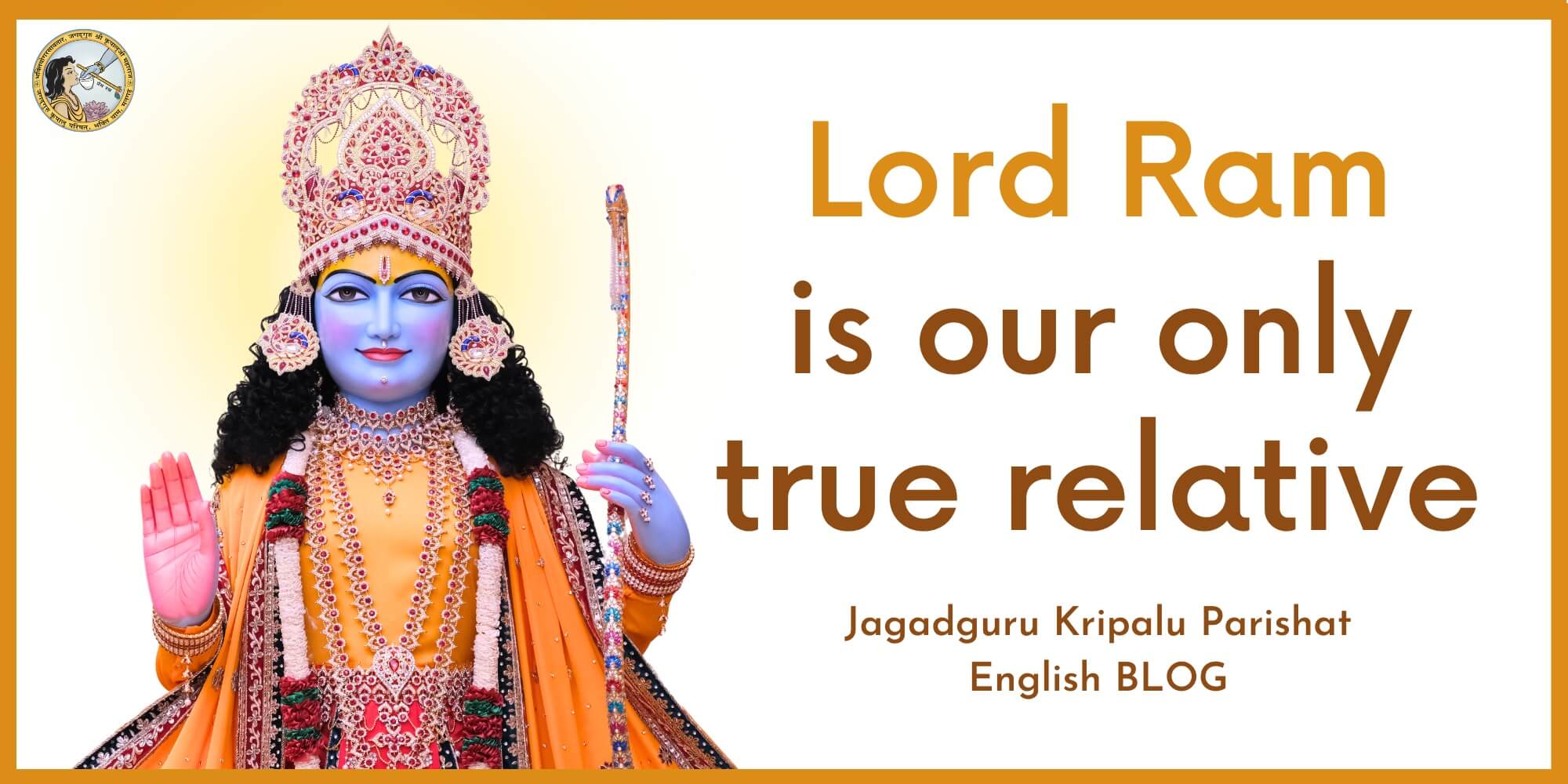
Lord Ram is our only True Relative
3 April 2024
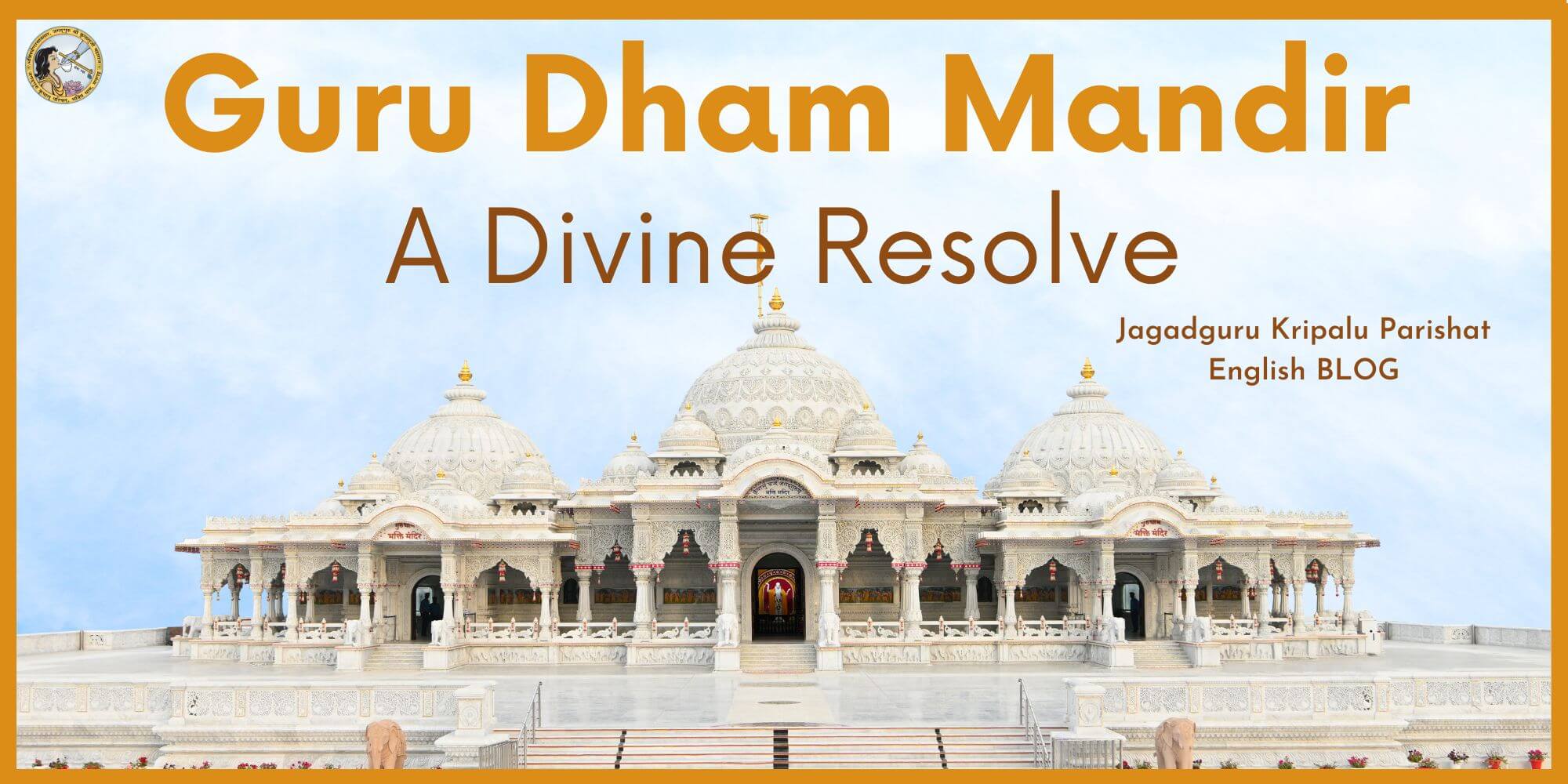
Shri Guru Dham, Bhakti Mandir – A Divine Resolve
27 March 2024
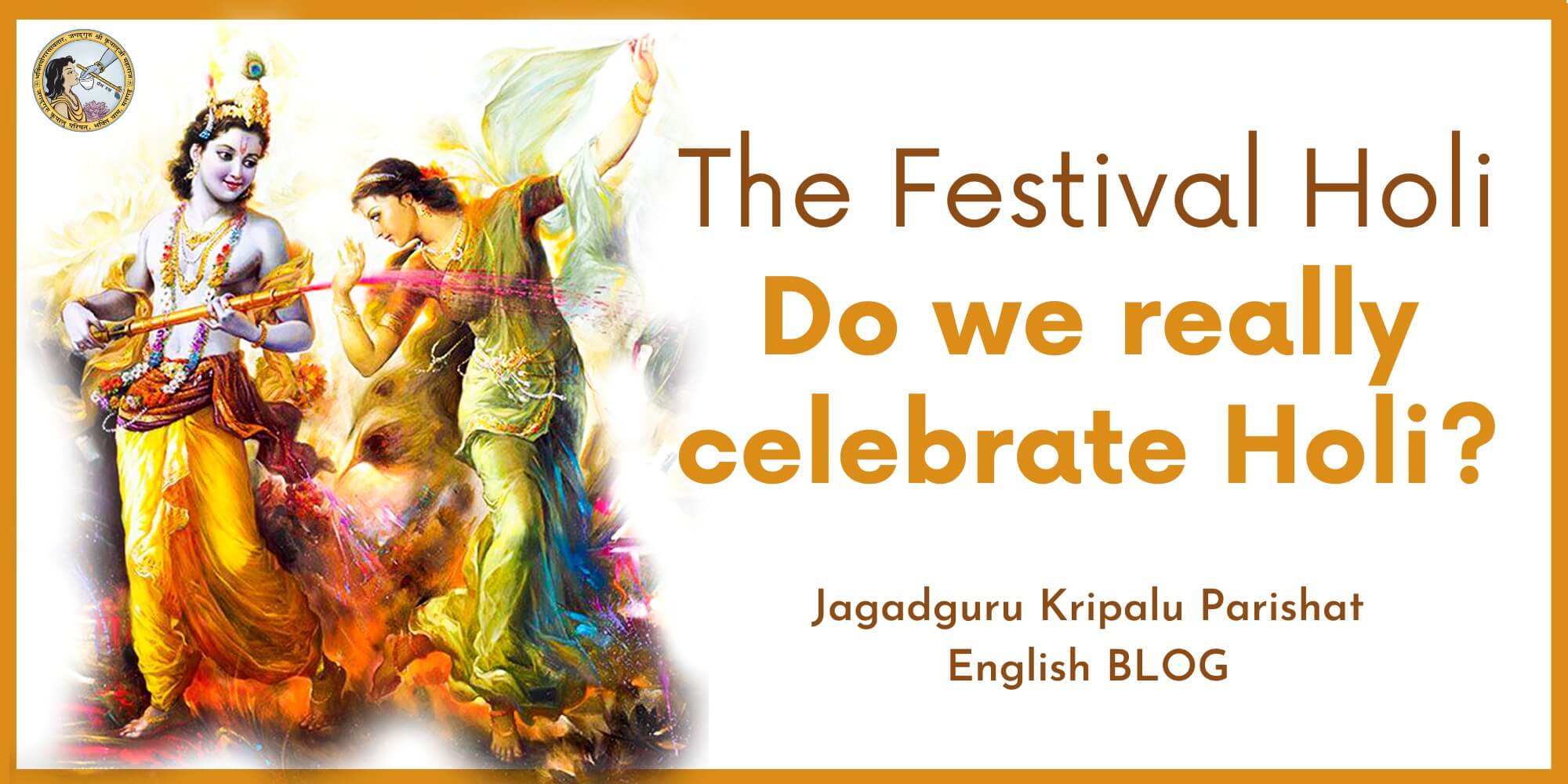
The Festival Holi
25 March 2024
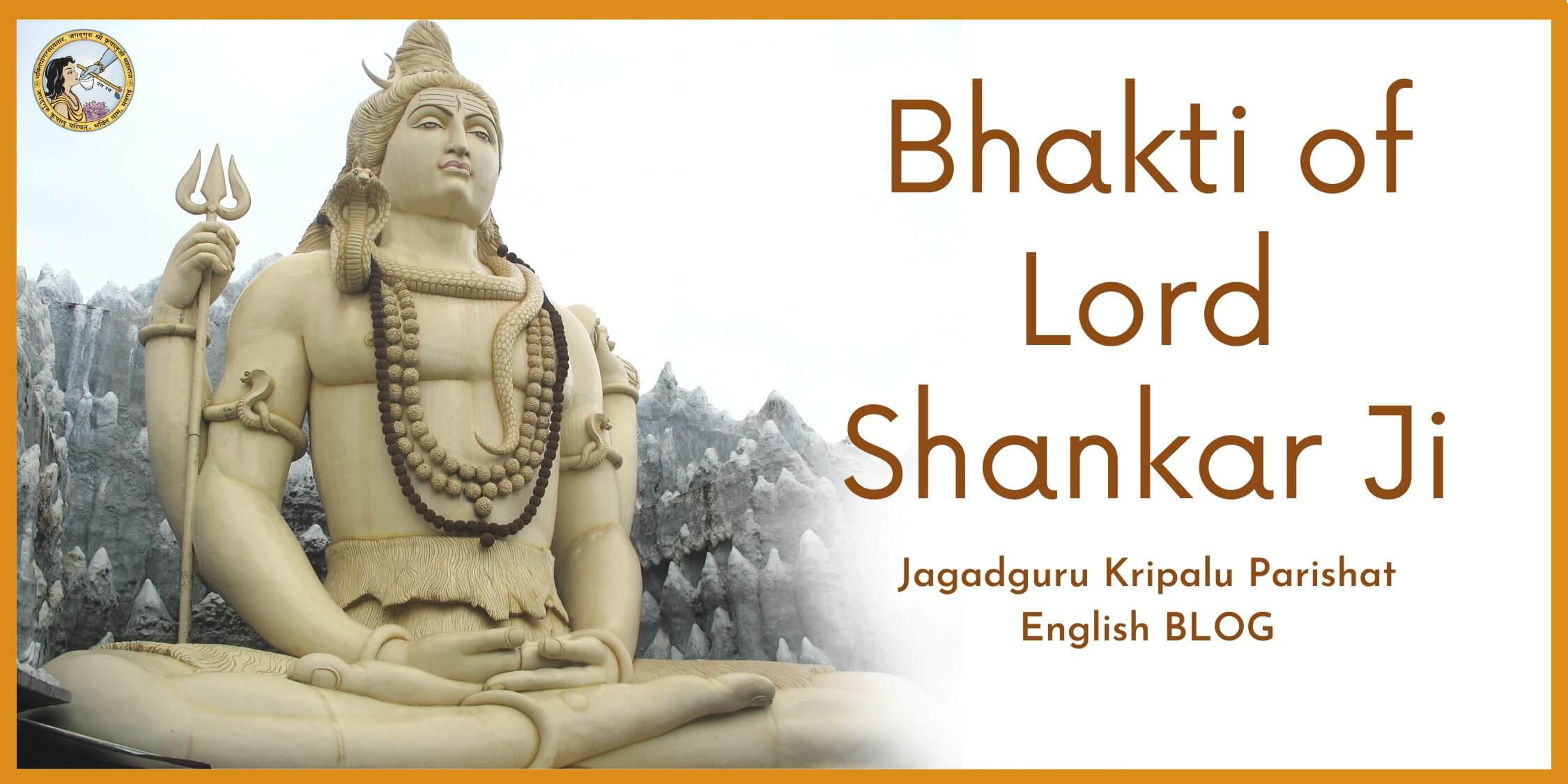
Bhakti of Lord Shankar Ji
7 March 2024
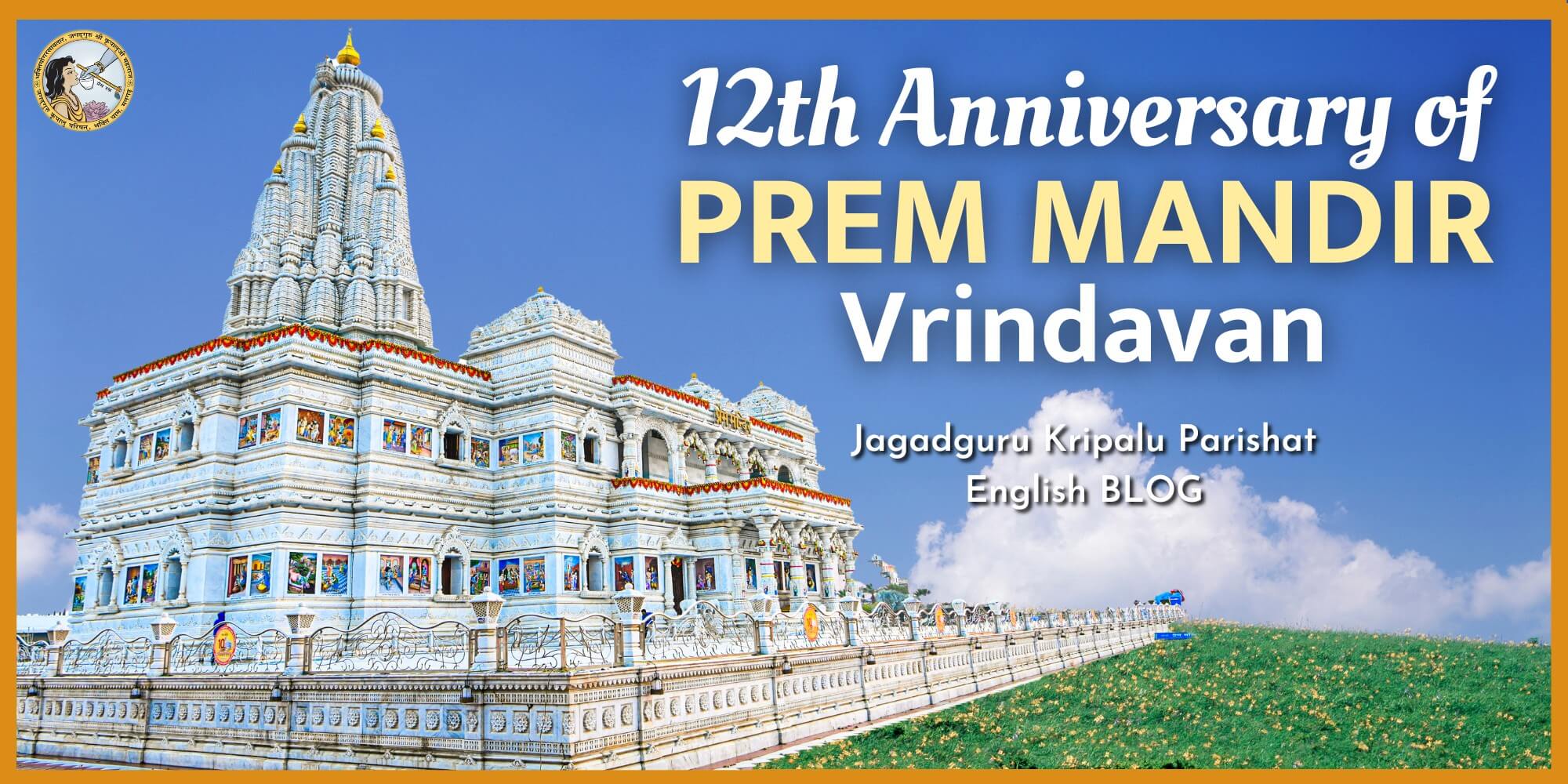
12th Anniversary of Prem Mandir
6 March 2024
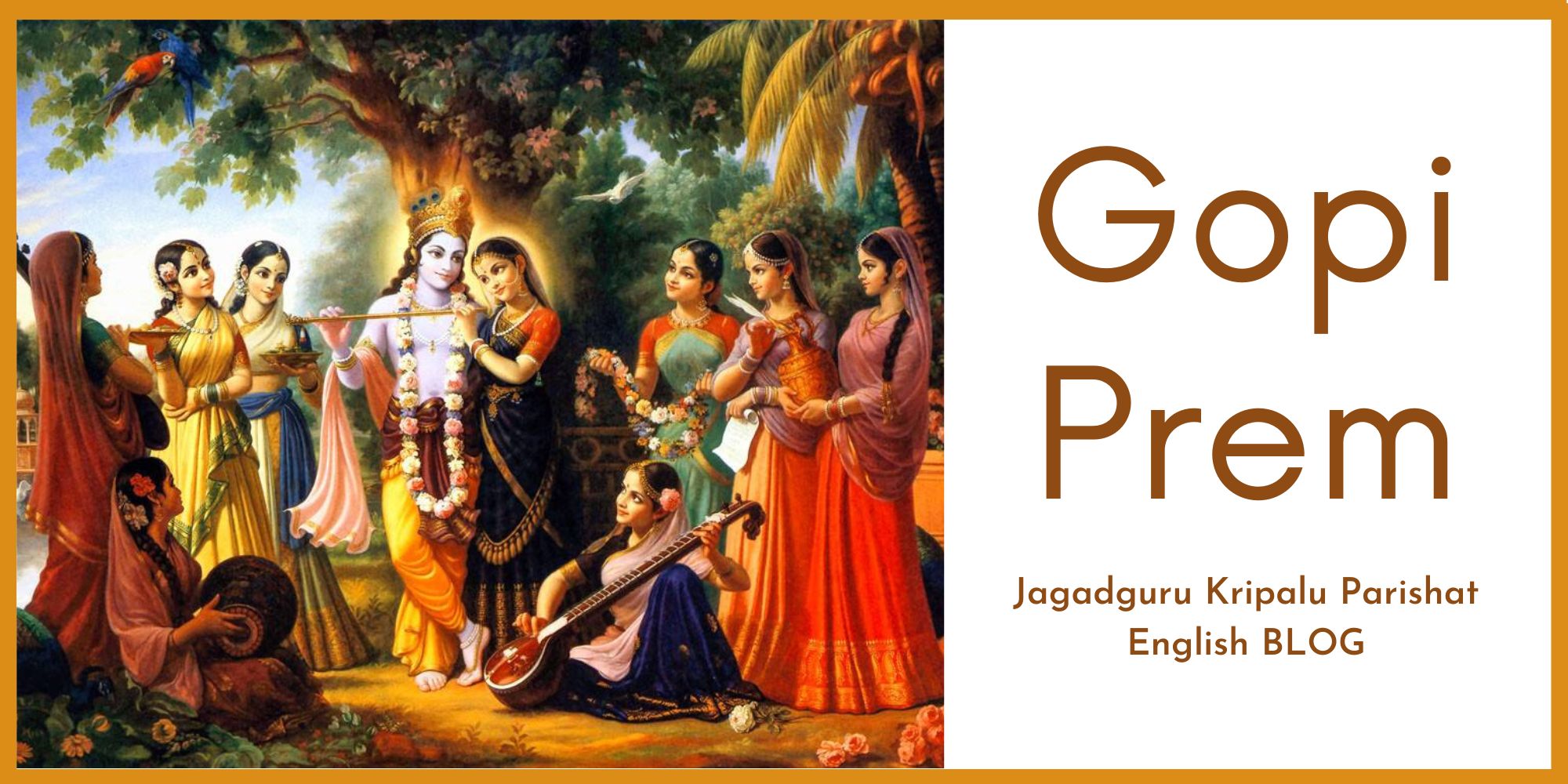
Gopi Prem
13 February 2024
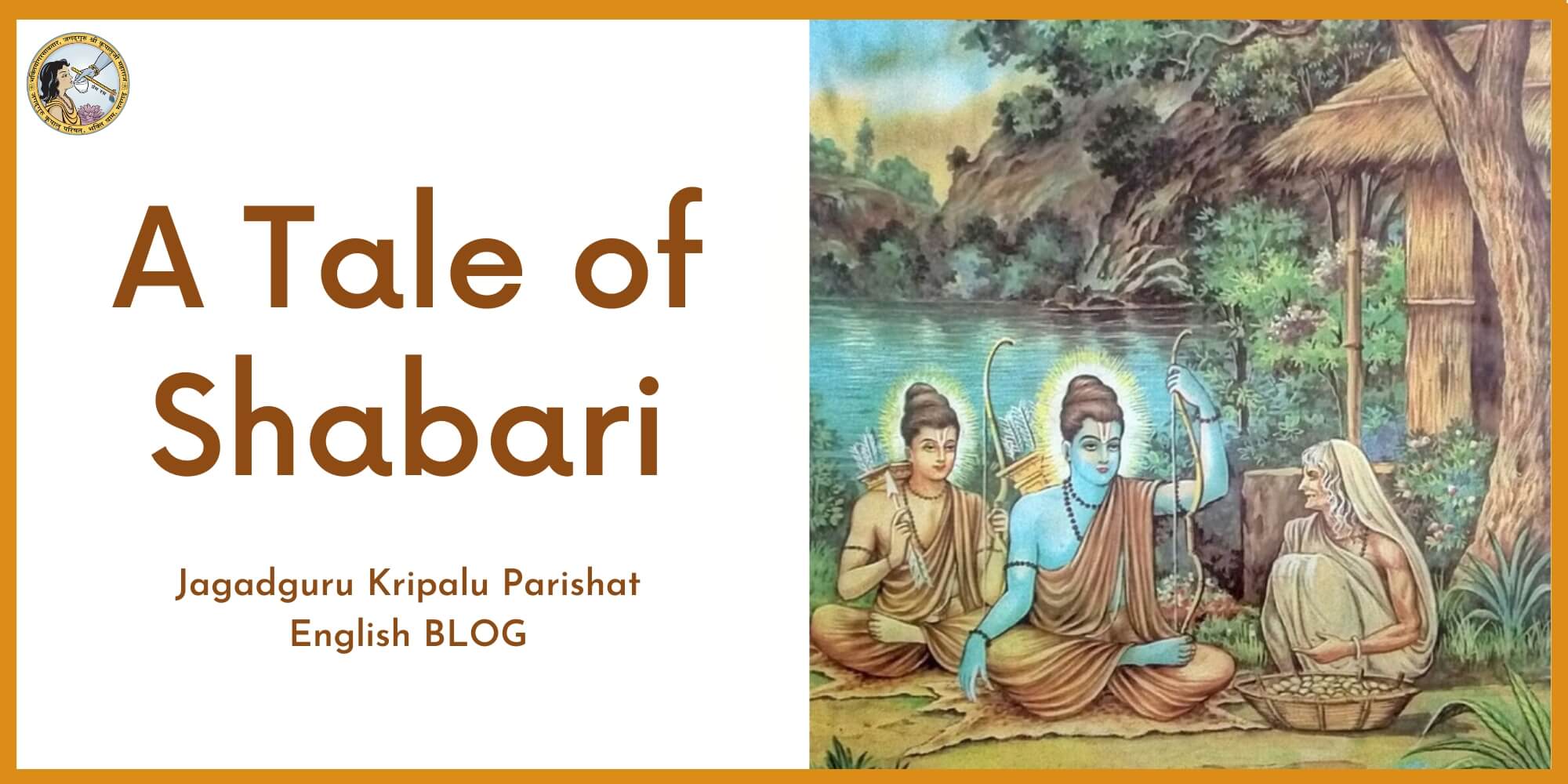
A Tale of Shabari
22 January 2024
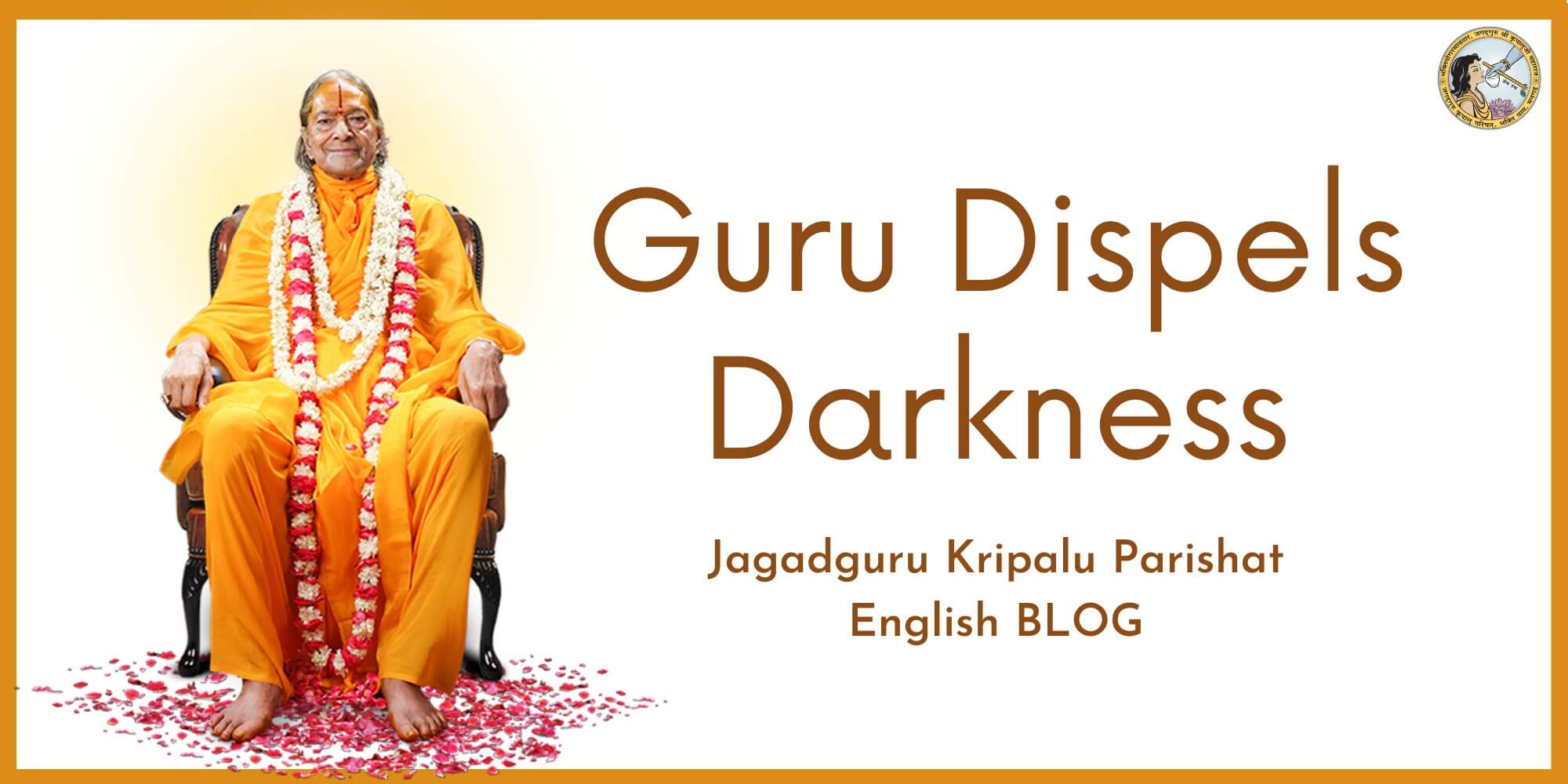
Guru Dispels Darkness
14 January 2024
GOD and GURU
14 January 2024
Jagadguruttam Shri Kripalu Ji Maharaj
14 January 2024
New Year Message by Jagadguru Shri Kripalu JI Maharaj
30 December 2023
The Supremacy of Divine Name ‘RADHE’
30 December 2023
Akshay Navami
21 November 2023
Significance of Govardhan Pooja
13 November 2023
The Significance of Diwali
9 November 2023
Meaning of Karwa Chauth
31 October 2023
Sharat Purnima has come once again…
27 October 2023
Sharat Purnima
27 October 2023
How to find true peace and happiness?
13 October 2023
What is my relationship with God?
13 October 2023
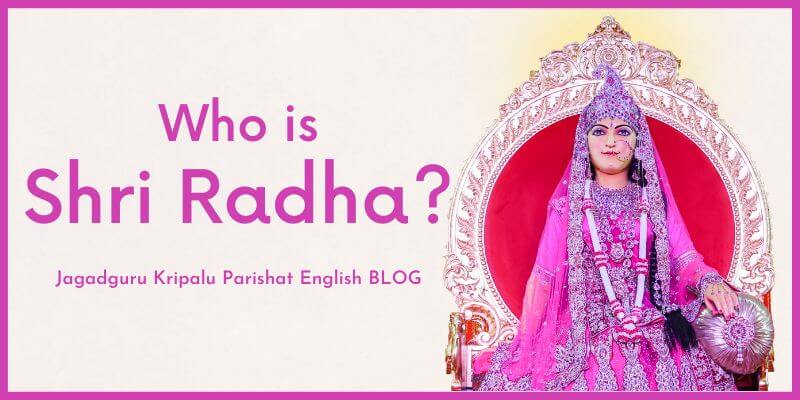
Who is Shri Radha?
21 September 2023
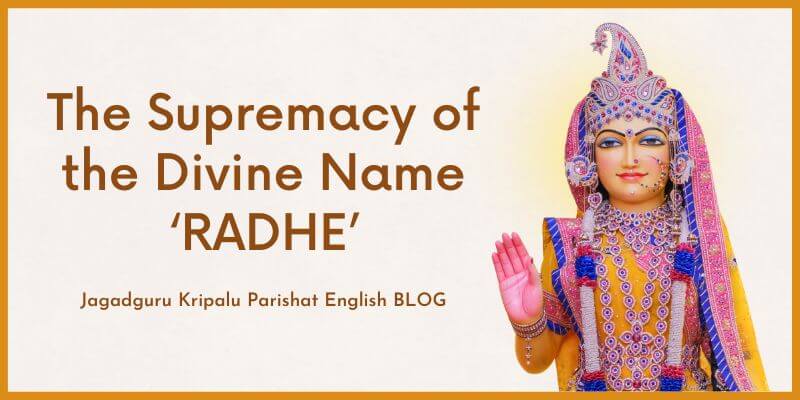
The Supremacy of the Divine Name, ‘RADHE’
19 September 2023
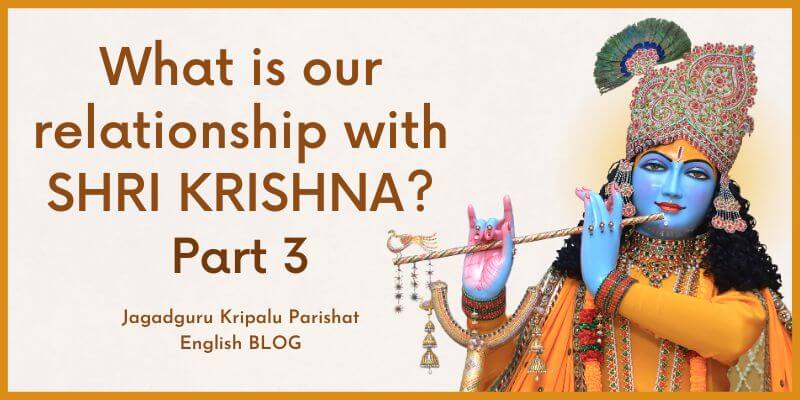
What is our relationship with Shri Krishna? Part 3
28 August 2023
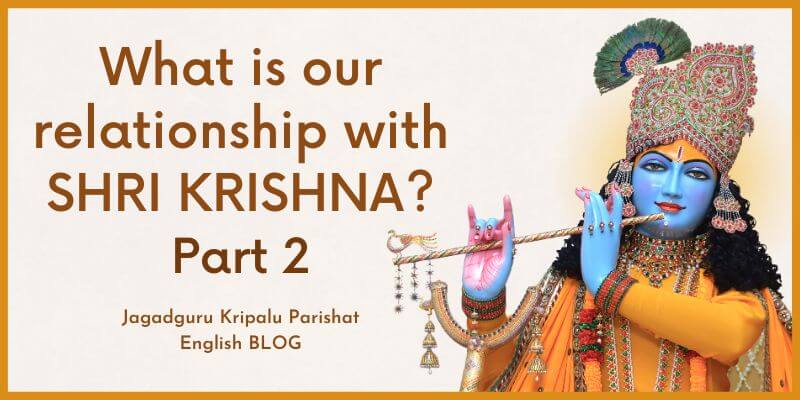
What is our relationship with Shri Krishna? Part 2
28 August 2023
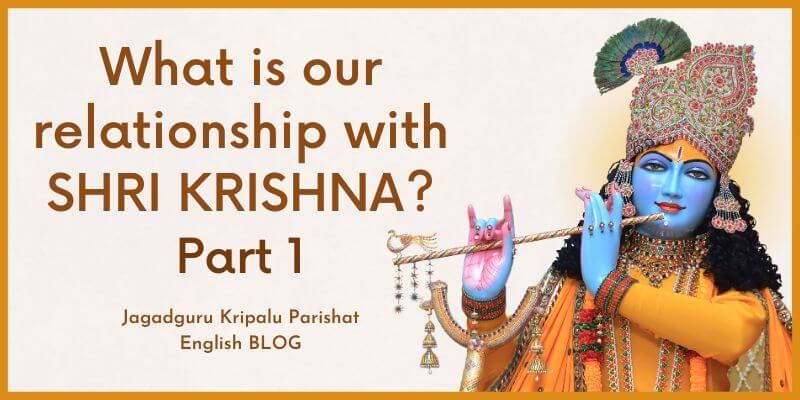
What is our relationship with Shri Krishna? Part 1
28 August 2023
The Significance of Naag Panchami
21 August 2023
The Profound Significance of Guru Purnima
30 June 2023
THE GURU
30 June 2023
Why do we have mood swings?
28 May 2023
Discovering the True Mother on Mother’s Day
12 May 2023
How do we become more tolerant?
4 January 2023
What is the root cause of poor Mental Health?
16 December 2022
How to Improve your Mental Health in 3 simple steps
9 December 2022
How to end suffering and increase our Atman Shakti?
8 December 2022