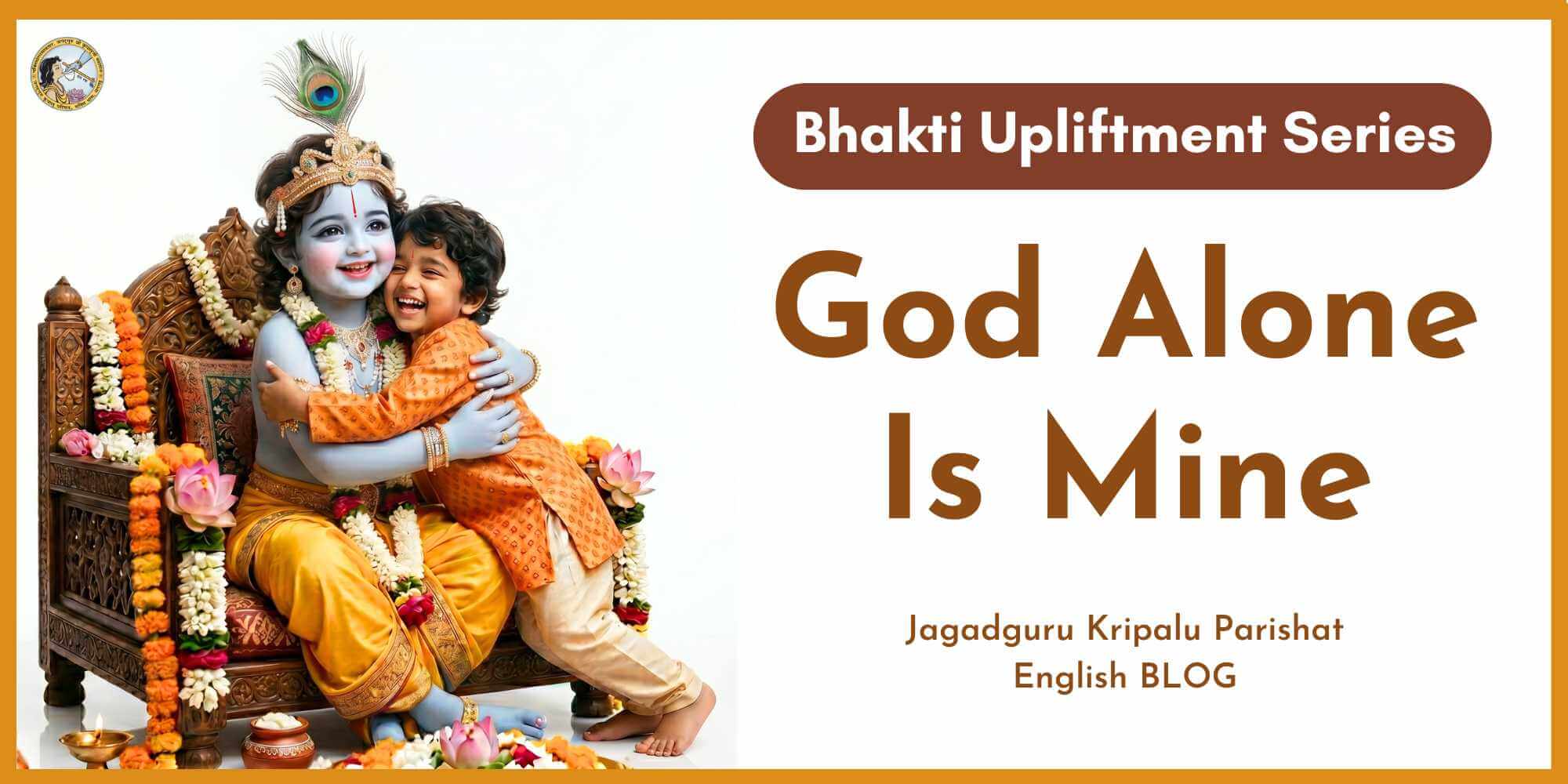
God Alone Is Mine
By Jagadguru Shri Kripalu Ji Maharaj
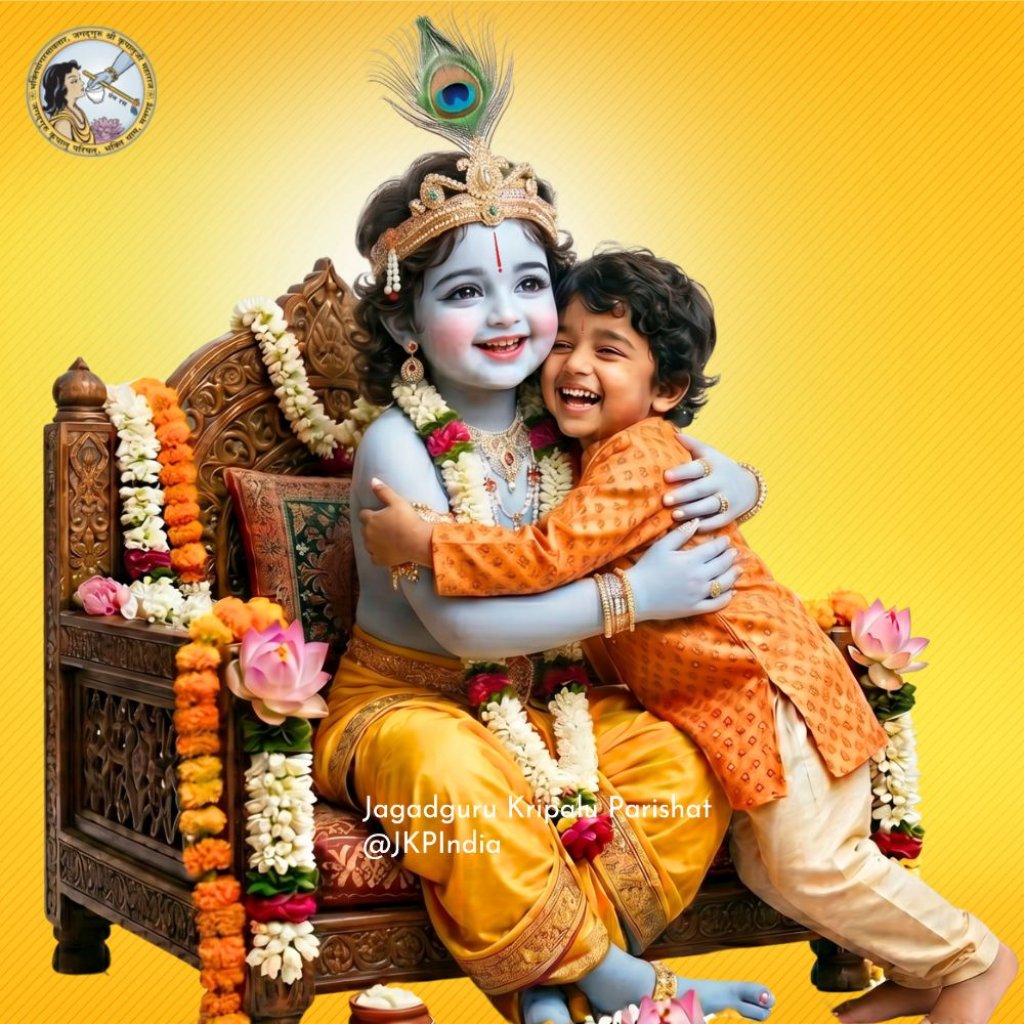
In one of his profound discourses, Maharaji beautifully explains the essence of divine love by describing its three fundamental aspects:
There are three entities: the ‘Lover,’ the ‘Beloved,’ and ‘Prem’ (Love). Among these, the most essential to understand is the Beloved. The Beloved is the one who possesses Divine love. This Divine Love is God’s most intimate personal power. It cannot be attained by personal effort; it can only be received through the grace of a Rasik saint. That is why even the greatest yogis, ascetics, and liberated, pure-hearted paramahansas beg for divine love. Thus, the treasure house of this Divine Love can only be two – Shri Krishna and His associates alone.
No one else can lay claim to owning this power called Prem (Divine Love). No personality controlled by Maya, not even the king of heaven, can occupy the seat of the Beloved. Wherever maya exists, it is absolutely apparent that divine love has not been attained, and one who is devoid of divine love cannot occupy the seat of the Beloved.
Therefore, no material personality can ever take that position of a Beloved. Yet, one truth remains. Without sevak-siddh bhav, there is no gati (spiritual destination). We cannot live without establishing a loving relationship with God.
The scriptures describe three ways of loving or surrendering to Him. One way to love Him is to feel, ‘I am His.’ Another is to feel, ‘He is mine.’ And the third is, ‘I am He.’ The first two are forms of devotion that can be consciously practised, but the third belongs to a highly elevated state and cannot be attained through practice alone.
There are rare glimpses of this exalted state in the lives of great saints. For instance, Ramakrishna Paramhansa would at times take a garland meant for Mother Kali and, while calling out ‘Mother, Mother,’ place it around his own neck. He was not aware of what he was doing, for in that moment he was completely one with the Divine Mother.
In such a state, the servant begins to feel he is the Master, and the Master, in divine play, feels Himself to be the servant.
For us, however, the path begins with cultivating two sentiments within our hearts: ‘I am His,’ and ‘He is mine.’ Of these, the latter is the higher and more intimate feeling. ‘He is mine’- let this alone remain firmly established in the heart. Whether or not He considers me His is not our concern.
There is no doubt that we belong to Him, for we are a part of Him. We share an eternal and natural relationship with the Divine. The Vedas declare that all true relationships of the soul exist only with God – no one else can have a real or lasting connection with it. In this sense, it is already established that we are His.
Yet, merely knowing this has not helped us. Countless lifetimes have passed in this understanding – ‘I was His, I am His, and I will always be His.’ This truth has been boldly proclaimed by Shri Krishna Himself and affirmed by the Vedas, and still, it has not brought us to our goal.
So how do we progress? By cultivating the deeper and more intimate sentiment: ‘He is mine.’ The great saints, Tulsi, Surdas, Meera, Kabir, Nanak, and Tukaram embraced this feeling and attained the highest state. They crossed maya and realized the supreme bliss of divine love. Those who have not awakened to this truth continue to wander through the cycle of 8.4 million life forms.
Therefore, we must develop the feeling that ‘He is mine.’ However, there is an important distinction. To say, ‘He is mine alone’ is incorrect. The true sentiment is, ‘He alone is mine.’ In other words, I have no one else but Him.”
The day this feeling becomes firmly established, all spiritual effort comes to an end. There is nothing more to do. No karma, no gyan, no separate bhakti remains. The final action required of the soul is to accept that He alone is mine. After that, everything is attained, and we will be free forever.
In the world, we claim to love many people, yet our minds remain constantly preoccupied with whether they love us in return. Whether it is a mother, father, child, husband, or wife, we keep wondering, ‘Do they truly love me or not?’
Why burden yourself with such unnecessary thoughts? Simply continue to love – without concern for whether the other person reciprocates or not.
But in worldly relationships, everything is calculated. If we send four letters and receive none in return, we stop writing. If we receive more, we feel satisfied. In this way, we measure and evaluate love – but this is not love; it is a business transaction. If someone does not respond as we expect, we withdraw. If they give more, we feel pleased. We constantly weigh profit and loss in our relationships. If the other person’s affection decreases, ours decreases. If they oppose us, we oppose them.
This is not love – it is the very opposite of love. Worldly love depends on external factors, and the moment those change, the so-called love disappears.
Outwardly, we try to show that we love the other person more than they love us, yet inwardly, we desire that they love us more than we love them. This inner contradiction keeps the mind in constant restlessness.
But if we firmly establish the sentiment, ‘He alone is mine,’ this dilemma comes to an end. We no longer remain entangled in questions such as, ‘Am I His or not? Does He love me or not? Does He consider me His own?’ All such thoughts dissolve, and the heart becomes steady in its love.
In the Gita, God declares: ‘I reciprocate the love of each soul exactly in the measure and sentiment with which it loves Me.’ This is an indisputable, unchanging divine law. Keeping this divine law in mind you should never worry that perhaps God does not love you. There is no question of doubt in this regard. There is no power that can shake or disturb the degree and amount of His love. There is no need to speculate: “Does He love me or not?” “How much does he love me?”
The extent of His love depends entirely on our own. How much God loves you is determined by how much you love Him.
‘How much love do you want from Him?’ – ‘A great deal!’ – ‘Then love Him a great deal.’ How can you love Him only a little and expect Him to love you abundantly?
Just as one cannot expect a hundred-rupee shirt for ten rupees, one cannot receive great love without offering it. Once this truth is understood, all doubts come to an end. We stop worrying about whether He loves us and focus instead on deepening our own love. Shri Krishna resides within our heart and knows every thought – there is no possibility of any misunderstanding.
We must therefore cultivate the feeling that ‘He alone is mine.’ This does not mean that He belongs exclusively to us. He loves infinite souls simultaneously. If ten million souls are loving Him equally and simultaneously, He will love them also equally and simultaneously. He is capable of doing this.
When even a worldly mother is able to love five or six children simultaneously, it should not be difficult to believe that the omnipotent Lord can love countless souls at once. He is the Lord of Yogmaya – for Him, nothing is impossible. Assuming innumerable forms for the sake of innumerable souls poses no difficulty for Him. Therefore, one should not think that He belongs to oneself alone.
We should instead reflect on why God would love us at all. Our body is impure, composed of the very same elements as the things we instinctively dislike. Yet the Divine Lord, who is supremely pure, still loves us – this in itself is truly astonishing.
If it were not His divine law that He reciprocates with the soul in the same measure that the soul loves Him, we could never even hope to receive His love. Just consider – this body is inherently unclean. It has nine openings, from which only perspiration and impurities are constantly discharged. Why, then, would the all-pure Lord even look upon, let alone love, such a material body made of the five elements?
Our eyes are made of the same five elements, and yet we shrink from looking at a heap of garbage. We delight in the sight of beautiful roses and lotus flowers blooming in a garden. The flowers are made of the same five elements, and so is manure. In fact, it is the manure that nourishes and helps the flowers grow. Still, we do not wish to look at it. If a few baskets of manure were placed beside the flowers, we would instinctively turn away in distaste.
How astonishing, then, that the all-knowing Divine Lord looks upon our material bodies and impure minds, and yet continues to love us unconditionally! We ourselves are not willing to love someone we consider ordinary or beneath our status.
There is a powerful example of this. A prince once became deeply infatuated with a Brahmin girl named Yogsheela. The king approached her father with a proposal, promising that she would become a queen. Most people would have accepted such an offer, but her father refused because he was a Brahmin and the prince was a Kshatriya.
The king insisted, even threatening him, because his son was unable to eat or sleep. At that point, Yogsheela asked for two weeks’ time. During those two weeks, she practised yogic techniques and reduced her body to mere skin and bones. When the prince came for the marriage, she stood before him in that condition, with filth smeared over her body.
The prince could not recognise her. He asked where the beautiful girl was. Yogsheela replied that if he loved flesh, he could go to a butcher shop, and if he loved her, she was standing before him. The prince turned away. Even an ordinary man would not accept such a form. In this way, she freed herself. This shows that the world loves externals, and the moment those externals change, love disappears.
In contrast, saints embody the highest humility. In their hearts, they feel that even if God were to ignore them, He should continue to shower His love upon others. Such is their selfless nature – they never seek anything for themselves, not even divine attention or grace. Overflowing with compassion, saints see the suffering of others as their own. Their only wish is that all souls receive God’s love and attain His bliss.
Now consider what we possess that would make God love us. Our body is impure, our mind is restless, and our intellect is so weak that we do not even know who we are, whether we are the body or the soul. When asked who we are, we answer with our name, profession, or body. We do not know our true identity.
In this world, a person who does not know who he is, is diagnosed as being insane by the doctor and locked up in a mental asylum. Such an individual poses danger to society. And the government spends money to keep him locked up so that he does no harm to the public.
This whole world is actually a madhouse. There are 8.4 million types of jails established by the Supreme Government and according to the extent of their madness, people are put in the appropriate jail. One is given the body of a dog; one becomes a cat; one, a human, still another a celestial god.
We however, do not accept ourselves to be insane. This is only natural; no madman ever accepts his own madness. Go to a mental institution and ask any inmate, ‘Are you insane?’ He will reply, ‘You are insane; I am perfectly normal.’ If a madman were to truly recognise his madness, he would no longer remain mad.
In the same way, one who accepts their own ignorance becomes inquisitive for true knowledge, and through that inquiry, attains realization of the self. But those who do not acknowledge their ignorance find no inclination to listen to spiritual wisdom.
I have met many billionaires. They come to me and say, ‘Maharaji, please grace me.’ I ask, ‘What kind of grace?’ They reply, ‘Divine grace.’ Then I say, ‘Very well – give me some of your time.’ But they respond, ‘Maharaji, I simply have no time. I have so many mills and factories across different states. I cannot spare time – not even for death.’ What does this reveal? It shows that you are not truly desirous of God. You still expect happiness from the world. You are convinced that fulfillment can be found here.
‘Very well, then go towards the world. Why come to me? Come to me only when you are firmly convinced that there is no happiness in this material world.’ Only when you deeply realise that not even the king of heaven can attain true peace or happiness, even in his dreams – should you seek this path.
You may think that saints can wave a magic wand and grant divine experiences. But reflect on this – if God or His saints had such a wand, would this world even exist? They would have bestowed divine bliss upon all beings across countless universes. God and His saints are satya-sankalp. This means that whatever they desire, happens and yet the material world continues to exist. How can you hope that they will liberate you without any effort or desire from your side? You have to make an effort yourself.
What you must do is this: accept that He alone is yours. Whether you realise this in a month, a year, one lifetime, or many lifetimes depends on your own effort. Your love must deepen and rise to its highest intensity. You must cultivate such a profound attachment that you feel from the depths of your heart, ‘He alone is mine.’
The scriptures declare that every moment in separation from Shyamsundar should feel like an eternity. Only when this intense longing awakens within you can you begin to hope for the attainment of God.
The path forward is to increase our attachment to Him until separation from Him becomes unbearable. At that stage, the symptoms of love begin to appear. The devotee becomes restless, sheds tears, loses interest in worldly talk, and even food and sleep lose their importance. Worldly conversations begin to feel painful, and the heart longs only for God.
At the highest stage, even separation becomes blissful. The saint Soordas says that in a state of separation, the beloved is seen everywhere. The pain of separation carries a sweetness that cannot be understood by others. Only one who experiences it knows its value.
Therefore, intensify the faith that He alone is mine. Accept yourself as His servant and Him as your Master. Accept Him to be the Beloved and yourself, the Lover. Increase your love, deepen your attachment, and remain steadfast on this path. Whether it takes one lifetime or many, the goal will be attained.
All glories to the Lord of Vrindavan.
Jagadguru Shri Kripalu Ji Maharaj
___________
A brief introduction of Jagadguru Shri Kripalu Ji Maharaj*
(Known by His devotees as Shri Maharaj Ji)
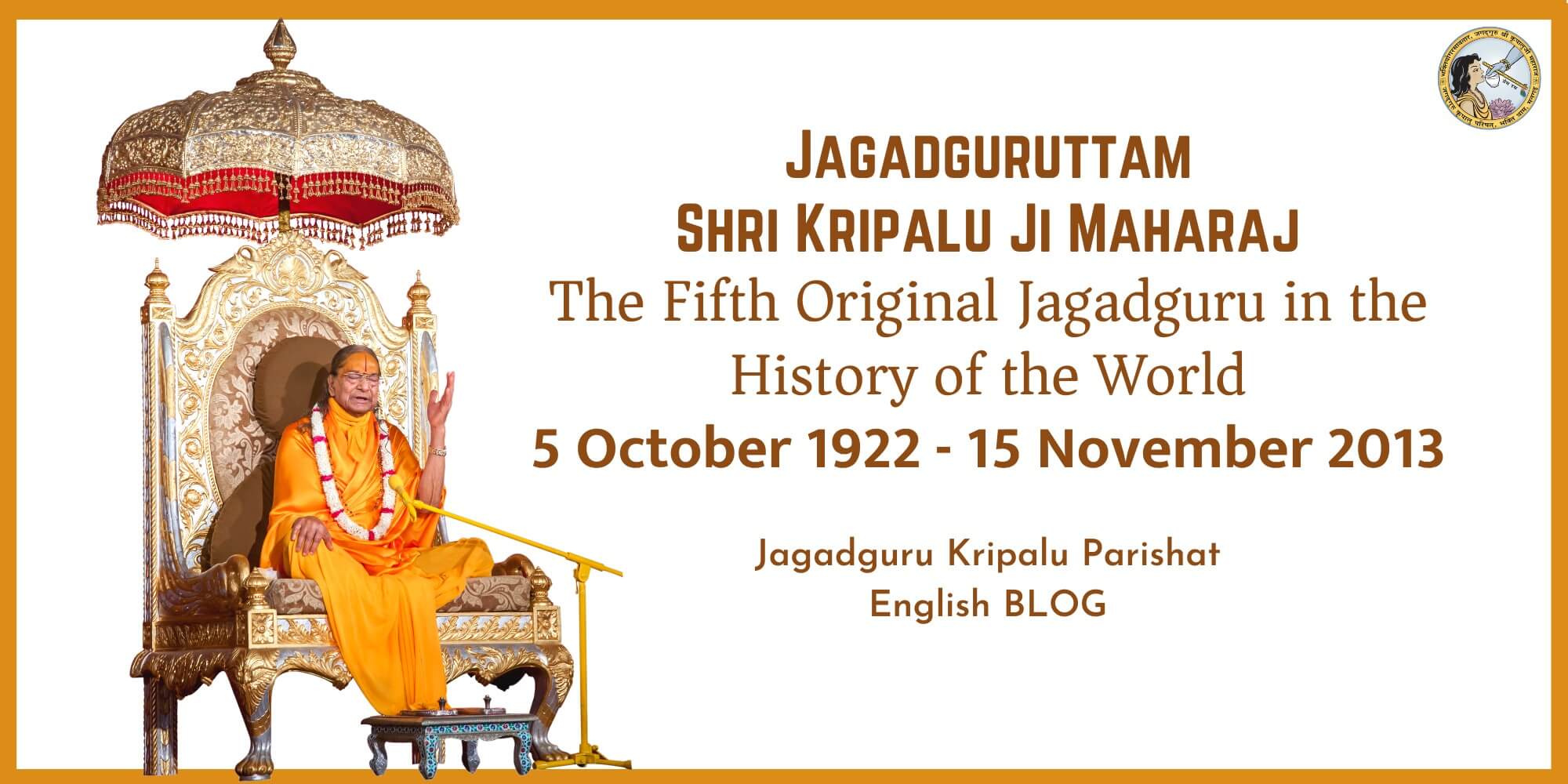
The original title of Jagadguruttam (Greatest Spiritual Teacher of the World) was bestowed upon Shri Kripalu Ji Maharaj on January 14, 1957, by Kashi Vidvat Parishad (a council of 500 greatest scholars saints of India). He composed divine texts like Prem Ras Madira, Prem Ras Siddhant, and Radha Govind Geet to lead us on the right path of devotion. He also gave priceless monuments as gifts to the world which include Bhakti Mandir located in Bhakti Dham, Mangarh, Prem Mandir located in Vrindavan Dham, and Kirti Mandir located in Barsana Dham. Shri Maharaj Ji also built hospitals for the impoverished, the Jagadguru Kripalu Chikitsalaya in Vrindavan, Jagadguru Kripalu Chikitsalaya in Barsana, and another one in Pratapgarh. All three help millions of underprivileged to gain free access to medical care. His Kindergarten, School, and College for impoverished girls Jagadguru Kripalu Parishat Education is located in Kunda and provides completely free education. To stay updated with all the news and events of Jagadguru Kripalu Parishat, visit www.jkp.org.in/jkpwhatsapp.
Follow us on Social
Recent Posts
Shri Radha Rani: The Divine Beauty That Enchants Even Krishn...
14 September 2026
Shri Radha Rani and Shri Krishna: Not two but one Divine Ent...
14 September 2026
Radha Rani: Her Divine Appearance and Transcendental Form
14 September 2026
The Art of Surrender: How to Let Shri Krishna Take Care of Y...
1 September 2026
How to Meditate on Shri Krishna
30 August 2026
The Divine Appearance of Shri Krishna
23 August 2026
The True Spirit of Hariyali Teej
14 August 2026
Guru Purnima Special: Why does God send Gurus to this World?
14 August 2026
Guru Purnima Special: Who is Greater – Guru or God?
24 July 2026
Guru Purnima Special: How does one find a true Guru?
24 July 2026
What Do You Have to Be Proud Of?
26 June 2026
What can the world really give us?
12 June 2026
Free Will: Choosing between God and the World
29 May 2026
Engage the Mind and Senses in Devotion
21 May 2026
Training the Mind in Bhakti
30 April 2026
Who is More Important – Sita or Ram?
25 April 2026
Akshaya Tritiya: Its True Significance
20 April 2026
God Alone Is Mine
18 April 2026
Ram in Krishna, Krishna in Ram
28 March 2026
The True Spiritual Significance of Holi
5 March 2026
Gaurang Mahaprabhu: The Incarnation of Divine Love
5 March 2026
Mahashivratri -Understanding the Oneness of the Divine
14 February 2026
Beyond Valentine’s Day: The Divine Love of Gopi Prem
14 February 2026
Jagadguruttam’s Teachings: How to Practice Bhakti for Shri...
17 January 2026

Jagadguruttam’s Teachings: Where is True Happiness?
17 January 2026
Jagadguruttam’s Teachings: WHO AM I?
17 January 2026
The New Year: A Time for Reflection
2 January 2026

Tulsi and Shaligram Vivah
2 November 2025
Akshay Navami: Remembering Radha Rani’s Lotus Feet
31 October 2025
Gopashtami: When God Became a Cowherd
29 October 2025
The Story Behind the Worship of Giriraj Govardhan
22 October 2025
Sharad Purnima Special – Always Feel the Presence of G...
5 October 2025
10th Anniversary of Jagadguru Kripalu Chikitsalaya, Vrindava...
26 September 2025
Janmashatami Special – Why connect with Shri Krishna?
11 August 2025
Janmashatami Special – Who is Shri Krishna?
5 August 2025
Who is More Merciful – God or the Saint?
11 July 2025
Who is Lord Jagannath?
27 June 2025
True Yoga: A Union of Body, Mind and Soul
22 June 2025
Celebrating Father’s Day with God
13 June 2025
Shri Radha Rani – Our Eternal Mother
10 May 2025
Sita is Ram, Ram is Sita
5 May 2025
Hanuman Ji’s Unmatched Seva
12 April 2025
Beyond Colors: Prahlad’s Teachings & the Spiritual Si...
15 March 2025
Beyond Colours: Prahlad’s Teachings & the Spiritual S...
14 March 2025
Who is Gaurang Mahaprabhu?
13 March 2025
What Blessing Should One Ask from Bhagwan Shiva?
24 February 2025
Celebrating 13 Glorious Years of Prem Mandir
22 February 2025
Gopi Prem Day – A Celebration of Divine Love
14 February 2025
Where does the soul go after death?
26 January 2025
The Relationship between God and the Soul – (The Real ...
21 January 2025
The Relationship between God and the Soul (The True Meaning ...
18 January 2025
The Relationship between God and the Soul
3 January 2025
Celebration or Contemplation on New Year
31 December 2024
The Unconditional Grace of God and Mahapurush
22 December 2024
Spiritual Leaders of Vrindavan Unite in Unprecedented Suppor...
10 December 2024
An Icon of Selfless Service: Remembering Her Holiness Sushri...
30 November 2024
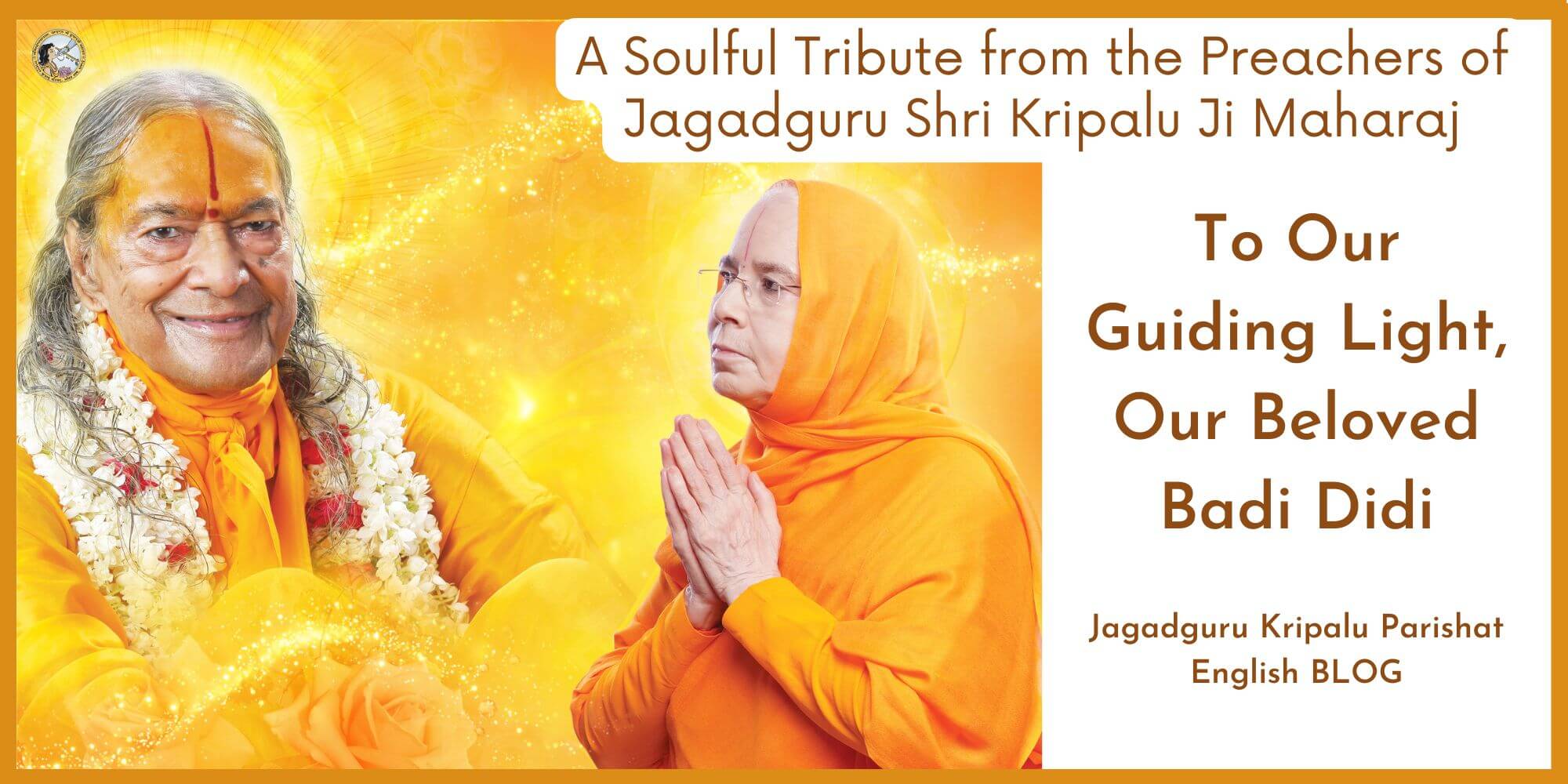
A Soulful Tribute from the Preachers of Jagadguru Shri Kripa...
30 November 2024
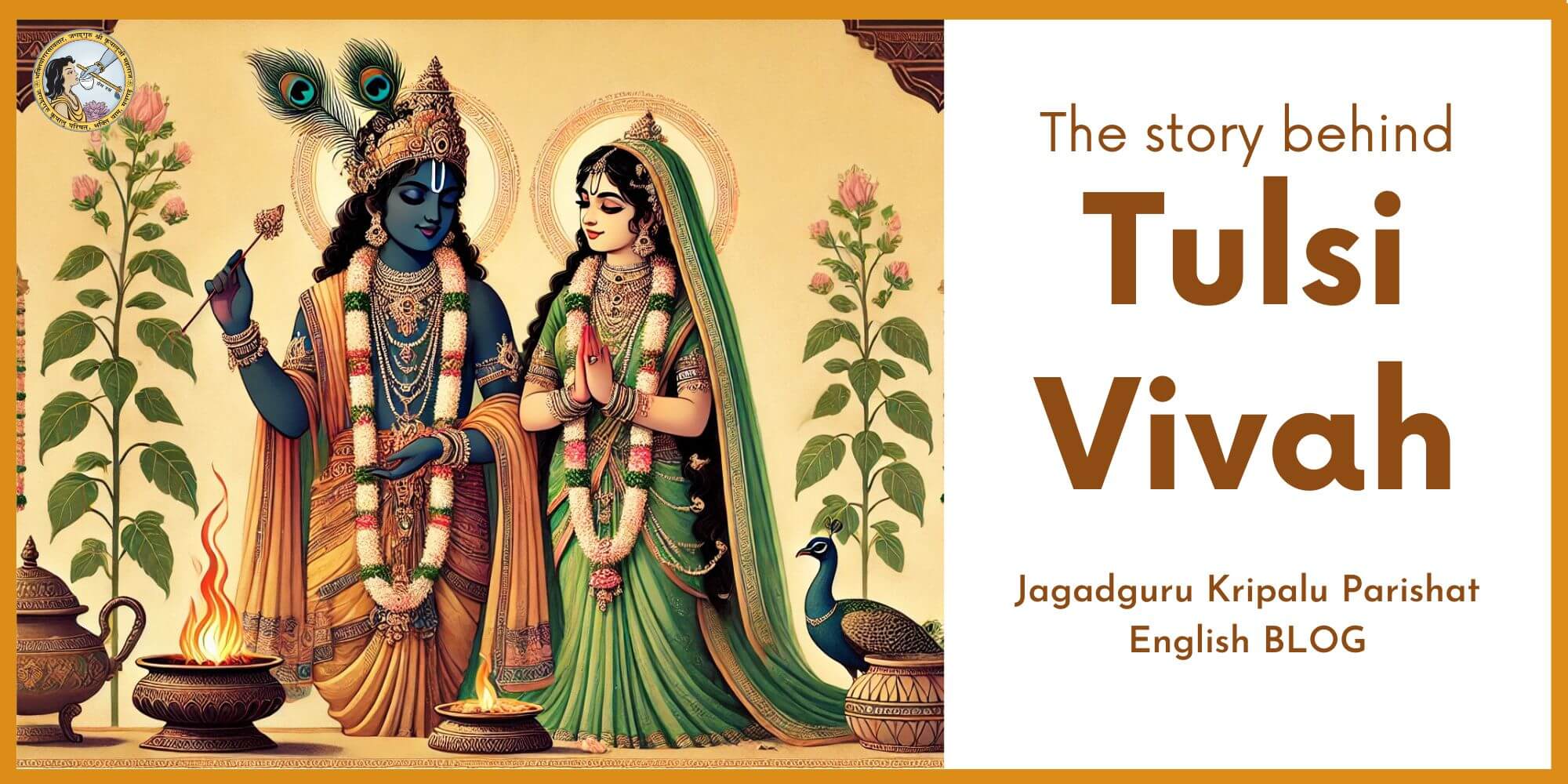
The Story Behind Tulsi Vivah
11 November 2024
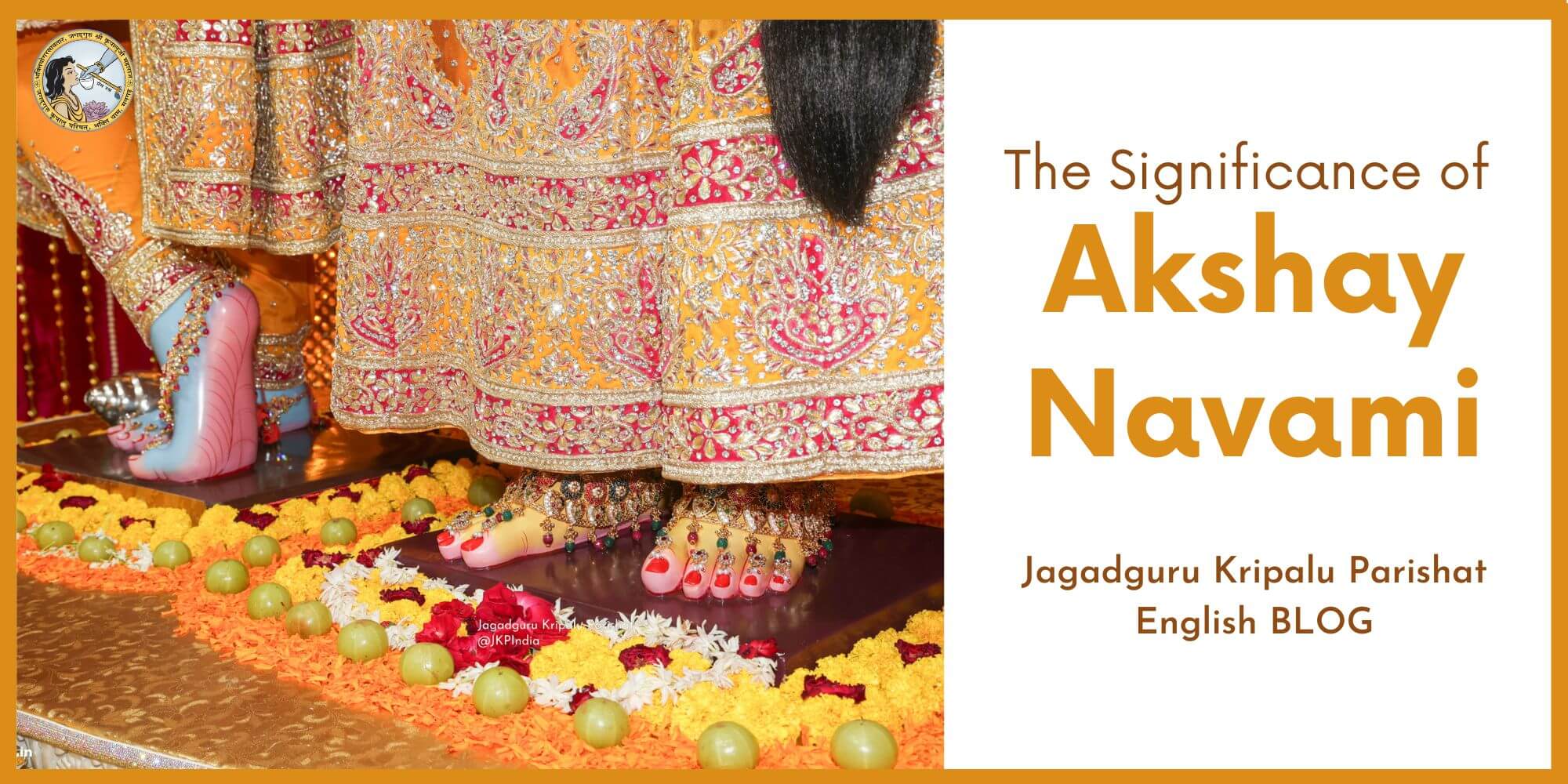
The Significance of Akshay Navami
10 November 2024
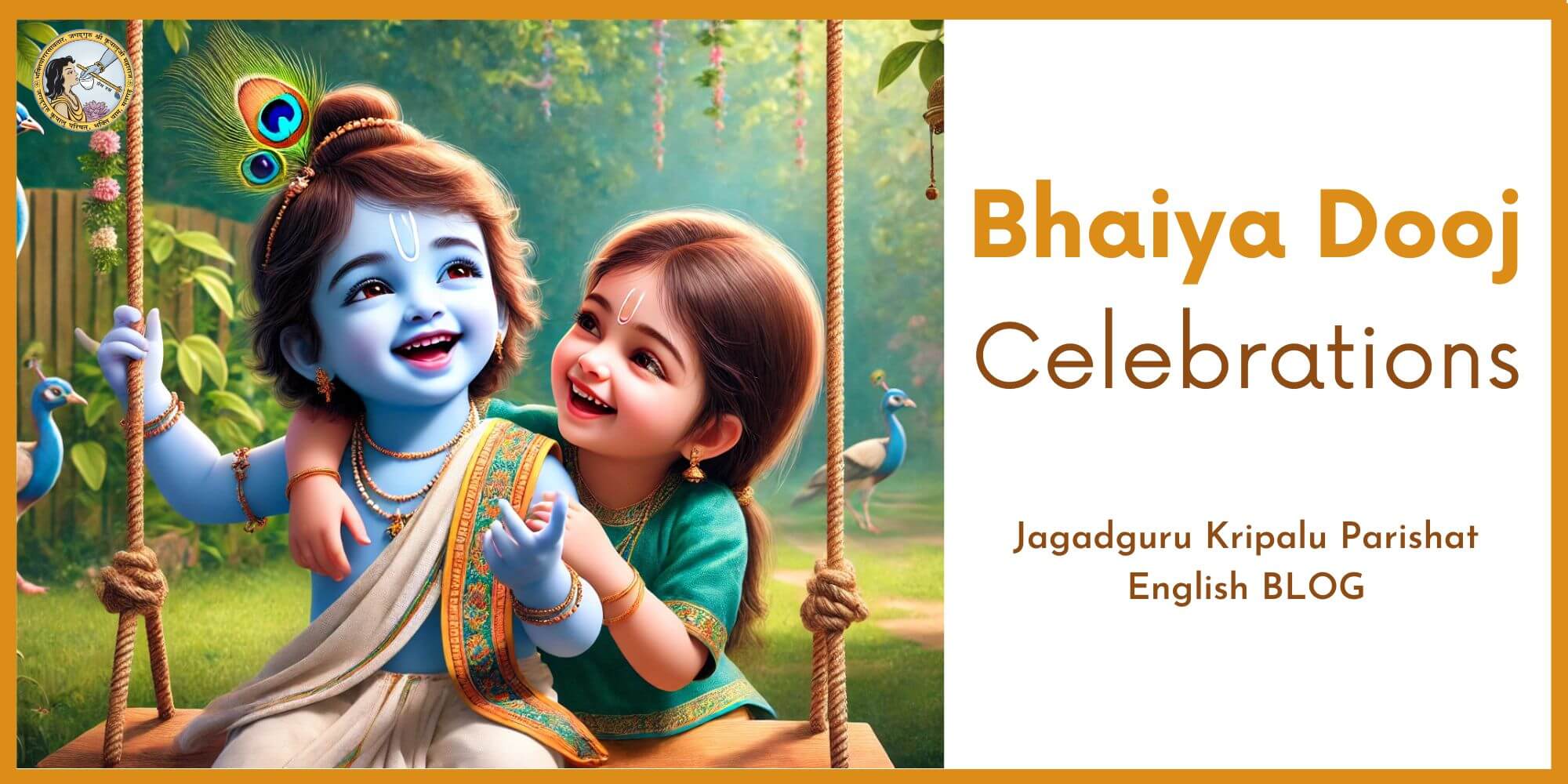
Bhaiya Dooj Celebrations
3 November 2024
Govardhan Pooja
2 November 2024
The secret behind celebrating Dhanteras
26 October 2024
Essence of Karwa Chauth
19 October 2024
Sharat Purnima, The Crest Jewel of all Festivals
18 October 2024
What is Roopdhyan by Jagadguru Shri Kripalu Ji Maharaj
12 October 2024
How do we control our Anger?
26 September 2024
Shri Radha Rani: The Essence of Divine Love
5 September 2024
The Divine Prison of Shri Krishna
31 August 2024
How to Build a Personal Relationship with Lord Krishna
25 August 2024
How to celebrate Raksha Bandhan
19 August 2024
The Significance of Hariyali Teej
7 August 2024
Rama Naam Satya Hai
5 August 2024
How to Engage Your Mind in God
5 August 2024
The importance of a Guru in a devotee’s life
15 July 2024
True meaning of ‘Yoga’ (Yog)
21 June 2024
Shri Krishna, Our Real Father
15 June 2024
How to control the mind?
2 June 2024

True Happiness
2 June 2024
How Fortunate You Are
31 May 2024
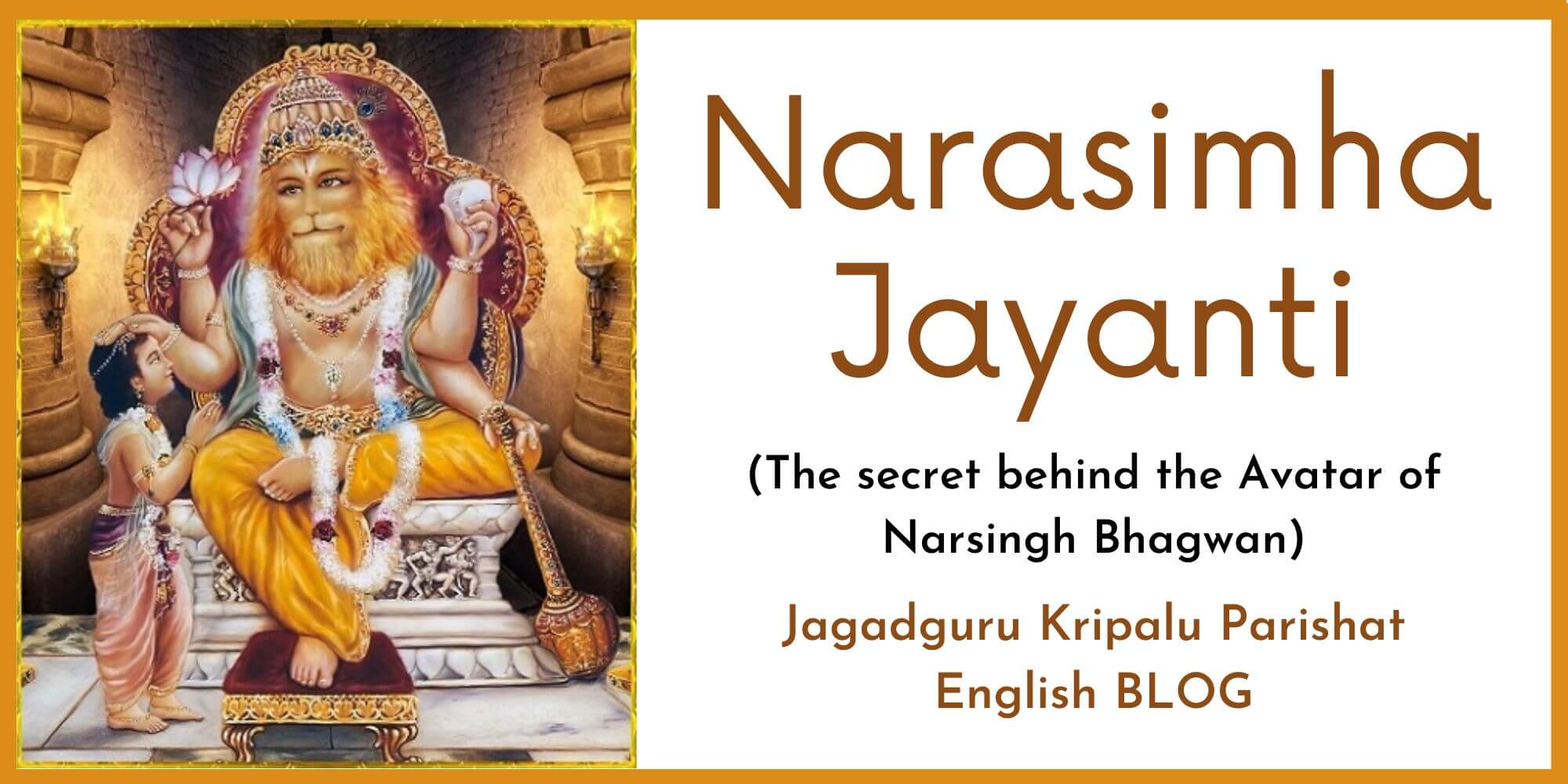
Narasimha Jayanti
19 May 2024
Importance of Sita Navami
15 May 2024
Importance of Mother’s Day
13 May 2024
The Significance of Akshaya Tritiya
9 May 2024
Lord Ram is our only True Relative
3 April 2024
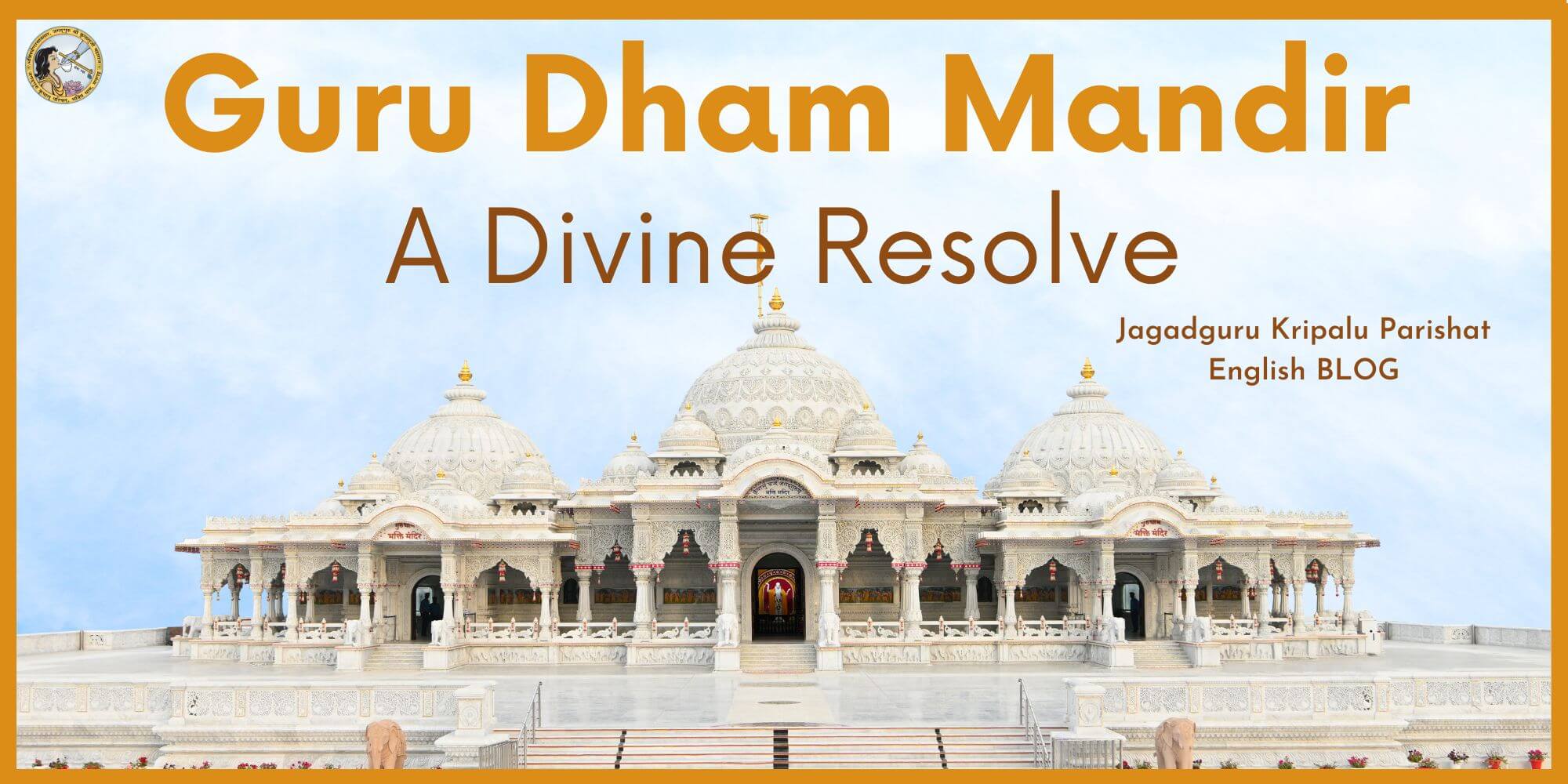
Shri Guru Dham, Bhakti Mandir – A Divine Resolve
27 March 2024
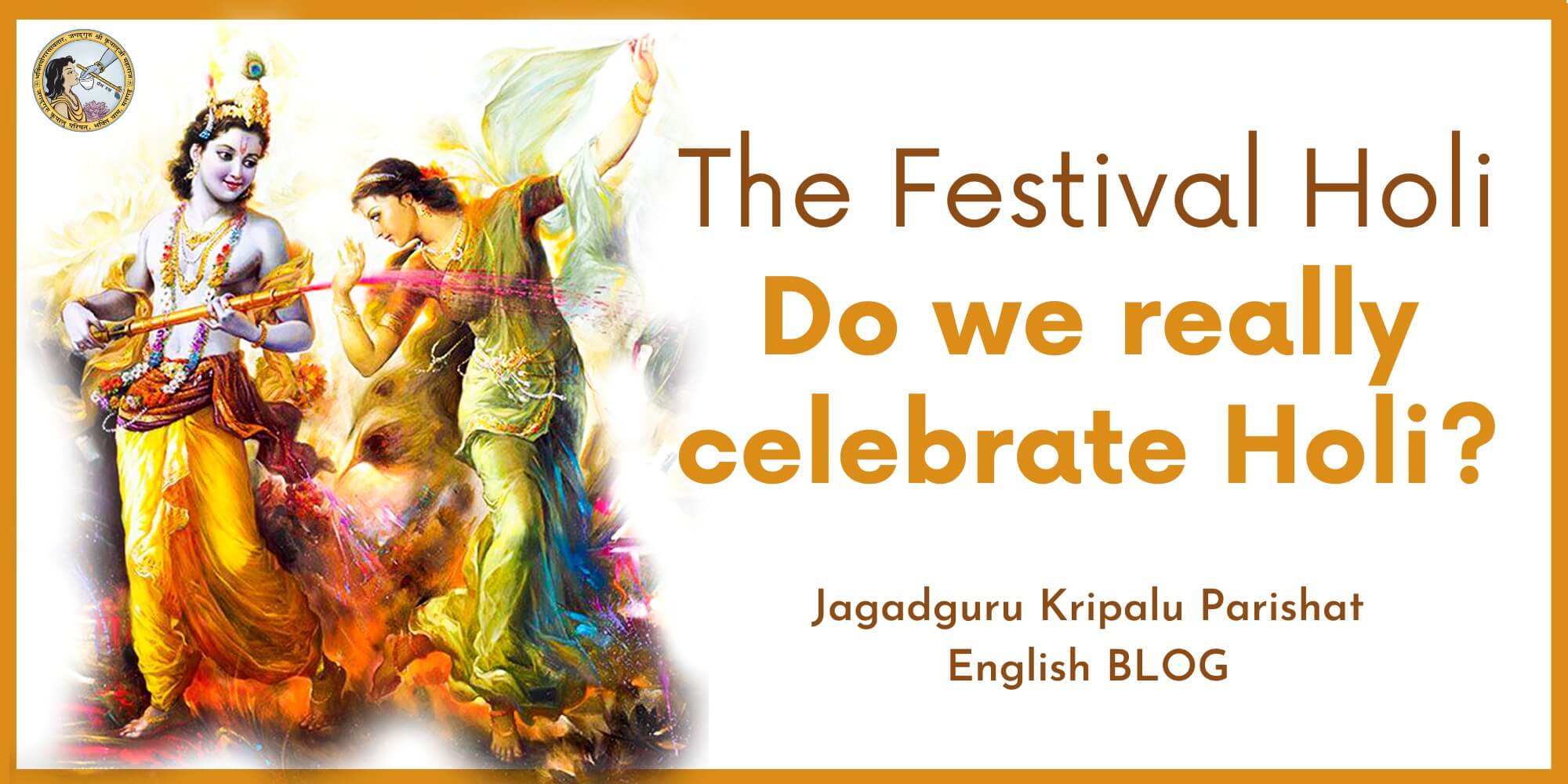
The Festival Holi
25 March 2024
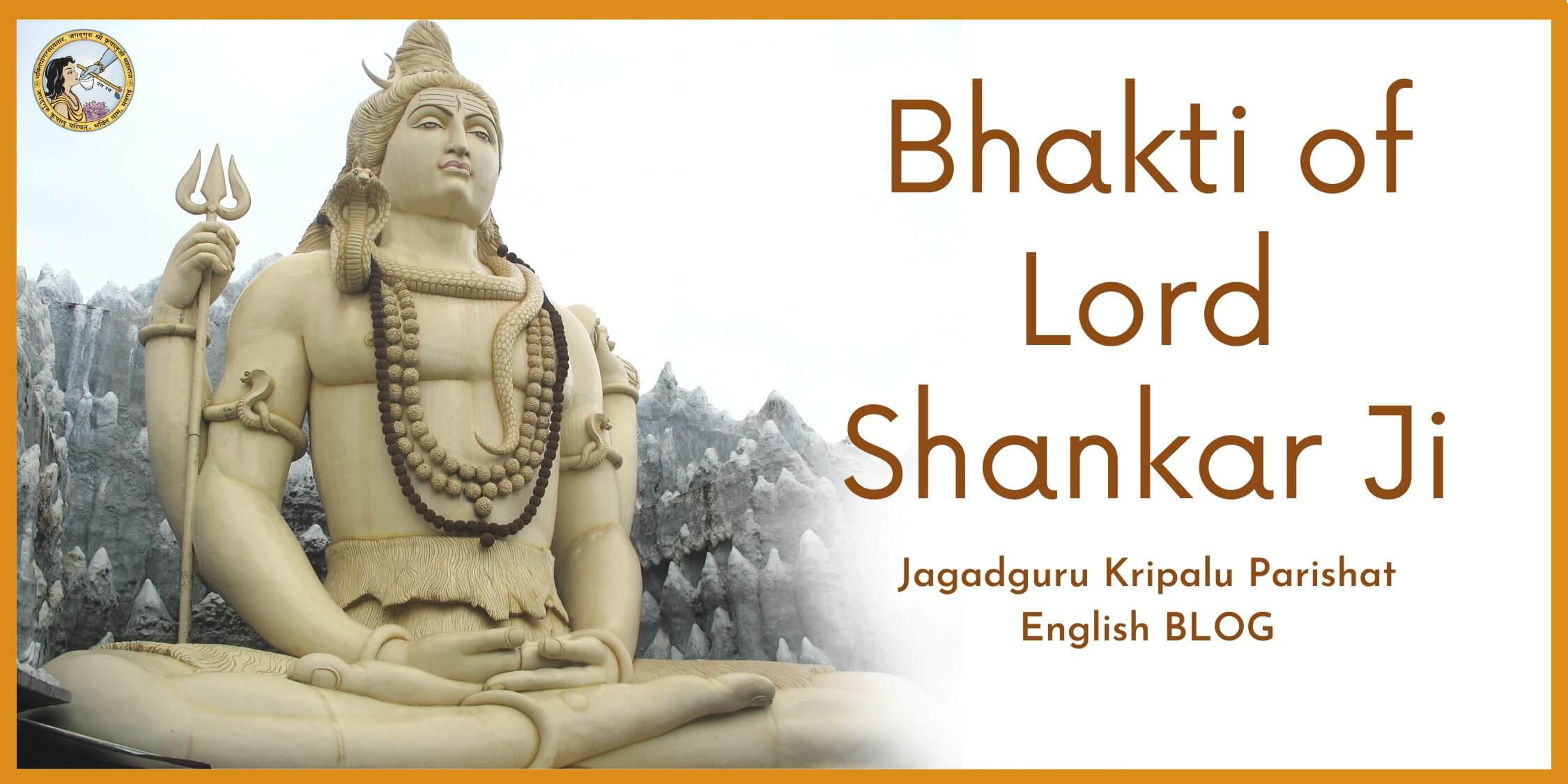
Bhakti of Lord Shankar Ji
7 March 2024
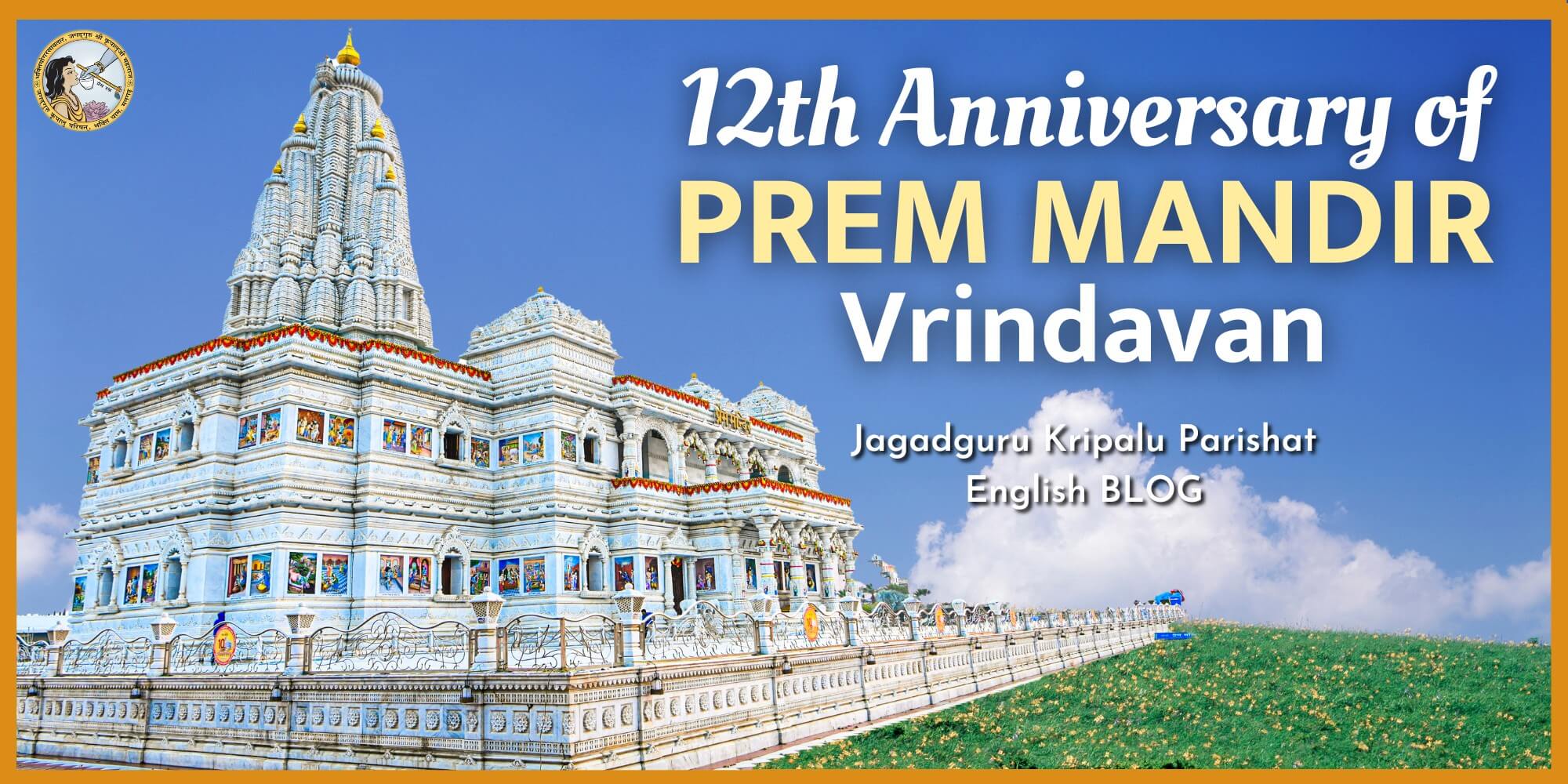
12th Anniversary of Prem Mandir
6 March 2024
Gopi Prem
13 February 2024
A Tale of Shabari
22 January 2024
Guru Dispels Darkness
14 January 2024
GOD and GURU
14 January 2024
Jagadguruttam Shri Kripalu Ji Maharaj
14 January 2024
New Year Message by Jagadguru Shri Kripalu JI Maharaj
30 December 2023
The Supremacy of Divine Name ‘RADHE’
30 December 2023
Akshay Navami
21 November 2023
Significance of Govardhan Pooja
13 November 2023
The Significance of Diwali
9 November 2023
Meaning of Karwa Chauth
31 October 2023
Sharat Purnima has come once again…
27 October 2023
Sharat Purnima
27 October 2023
How to find true peace and happiness?
13 October 2023
What is my relationship with God?
13 October 2023
Who is Shri Radha?
21 September 2023
The Supremacy of the Divine Name, ‘RADHE’
19 September 2023
What is our relationship with Shri Krishna? Part 3
28 August 2023
What is our relationship with Shri Krishna? Part 2
28 August 2023
What is our relationship with Shri Krishna? Part 1
28 August 2023
The Significance of Naag Panchami
21 August 2023
The Profound Significance of Guru Purnima
30 June 2023
THE GURU
30 June 2023
Why do we have mood swings?
28 May 2023
Discovering the True Mother on Mother’s Day
12 May 2023
How do we become more tolerant?
4 January 2023
What is the root cause of poor Mental Health?
16 December 2022
How to Improve your Mental Health in 3 simple steps
9 December 2022
How to end suffering and increase our Atman Shakti?
8 December 2022
Guru Purnima Special: What is Guru Tattva?
24 July 2026